
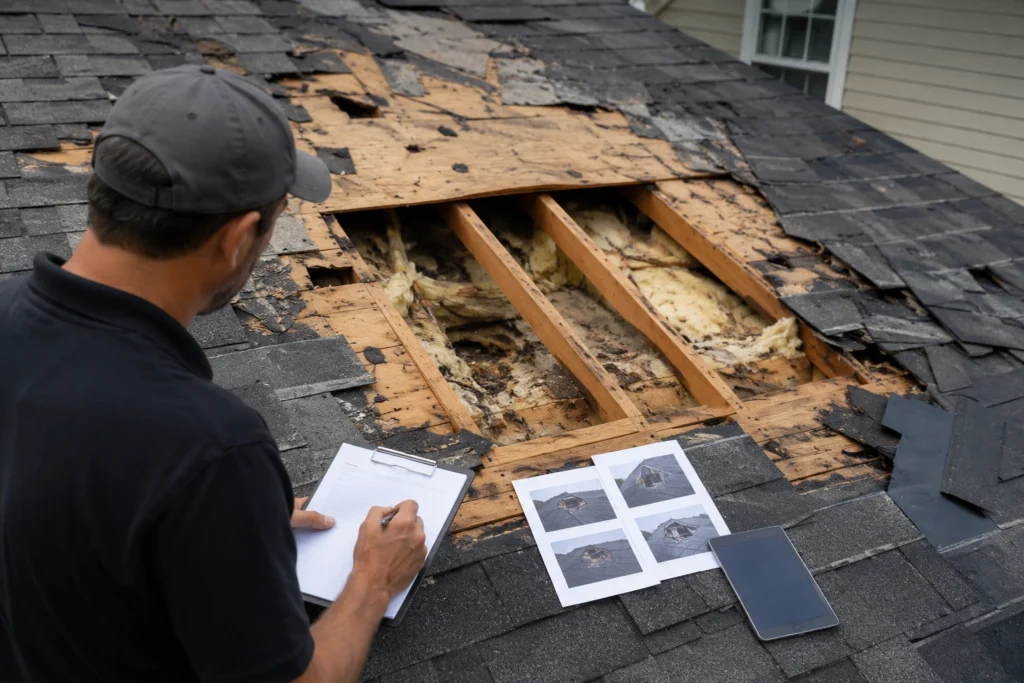
A roof claim can feel straightforward at first. A storm hits. You report the damage. The insurance company sends an adjuster. An estimate arrives. Case closed. Except sometimes it isn’t. When an insurance adjuster missed roof damage, homeowners often discover the problem weeks or even months later. Maybe a contractor uncovers additional damage during repairs. Maybe a leak suddenly appears after the next rainstorm. Or perhaps the estimate simply doesn’t include critical components necessary to restore the roof properly.
The reality is that missed roof damage is more common than many homeowners realize. Insurance adjusters handle large claim volumes, especially after major weather events. While many inspections are thorough, no inspection process is perfect. If an insurance adjuster missed roof damage, the good news is that homeowners still have options. Understanding what happened, gathering the right documentation, and taking the proper next steps can significantly improve the outcome of a claim.
How Insurance Roof Inspections Work
Before discussing missed damage, it helps to understand what an insurance inspection is designed to accomplish. An adjuster’s primary responsibility is to evaluate whether covered damage exists and estimate the cost of repairs based on policy provisions. Sounds simple. In practice, however, it involves many moving parts.
The Role of an Insurance Adjuster
Insurance adjusters inspect property damage, document findings, photograph affected areas, and prepare estimates for the insurance carrier.
They may examine:
- Roofing materials
- Flashing systems
- Gutters
- Vents
- Interior water damage
- Exterior elevations
Their findings become the foundation for the claim decision.
What Happens During a Roof Inspection
A typical inspection often includes:
| Inspection Activity | Purpose |
| Roof examination | Identify storm damage |
| Photography | Document conditions |
| Measurements | Determine repair scope |
| Interior inspection | Verify leaks and water damage |
| Estimate creation | Calculate repair costs |
Many inspections are completed efficiently. However, efficiency sometimes creates limitations.
Why Initial Inspections Are Not Always Perfect
After significant storms, adjusters may conduct multiple inspections each day. Time matters. Safety matters. Weather conditions matter. And some damage simply cannot be seen during a quick visual inspection. For example, a roof may appear repairable from the surface while hidden decking deterioration exists beneath the shingles. Moisture intrusion may be present long before stains appear on interior ceilings. This is often where problems begin.
Why Insurance Adjusters Miss Roof Damage
Most homeowners assume a roof inspection will identify every issue. That assumption can become expensive. There are several reasons damage gets overlooked.
Catastrophe Claims Create Inspection Backlogs
Following major hailstorms or wind events, insurance carriers often receive thousands of claims within a short period. Adjusters work long hours. Schedules become packed. Inspection times may become compressed. Even experienced professionals can miss important details under these circumstances.
Hidden Damage Is Not Always Visible
Not all storm damage announces itself. Some forms of damage remain concealed beneath roofing materials.
Examples include:
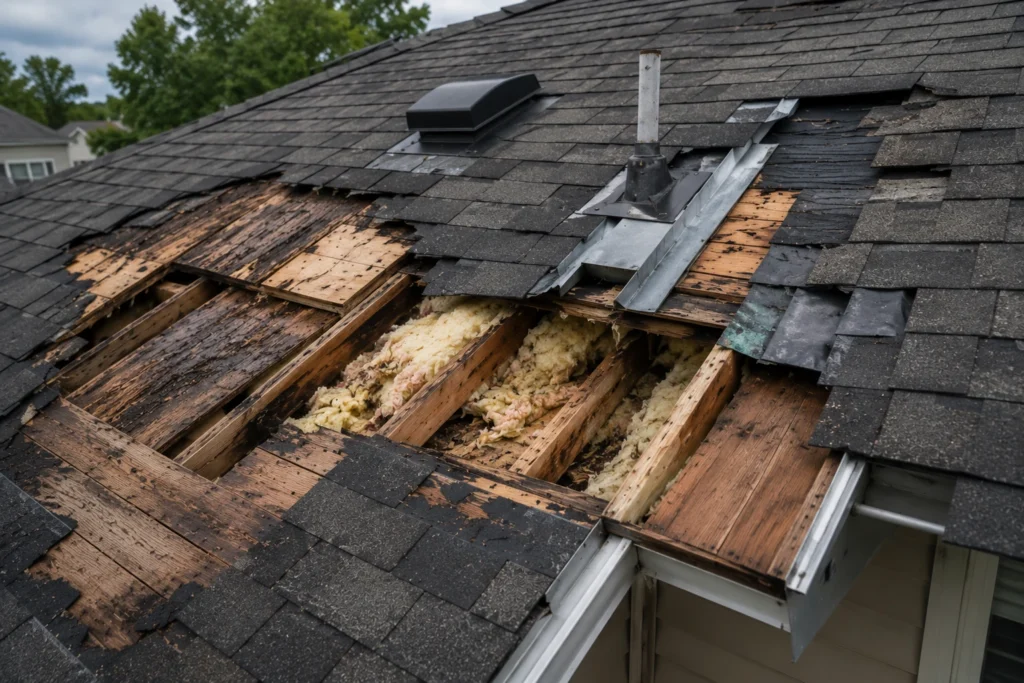
- Damaged roof decking
- Wet insulation
- Torn underlayment
- Hidden moisture intrusion
- Structural weakening
A roof can look relatively normal from above while significant problems exist underneath.
Roof Access Limitations
Certain roofs are difficult to inspect thoroughly. Steep slopes. Wet surfaces. Multi-story structures. Complex roof designs. Safety restrictions sometimes limit inspection access, reducing visibility into certain damage areas.
Damage Can Develop Over Time
Storms frequently create conditions that worsen gradually. A slightly lifted shingle today may become a significant leak six months later. Minor flashing damage can eventually allow water penetration. What appears insignificant during an initial inspection may evolve into a major problem. That is why an insurance adjuster missed roof damage situation sometimes surfaces long after the original inspection occurred.
Common Types of Roof Damage Insurance Adjusters Miss
Certain forms of damage are more likely to be overlooked than others. Understanding these categories can help homeowners identify potential issues before they become severe.
Hail Damage
Hail creates more than visible dents. Some impacts leave subtle signs that require careful inspection.
Commonly overlooked hail damage includes:
- Granule loss
- Bruised shingles
- Fractured shingle mats
- Soft metal impacts
- Ridge cap damage
A roof may appear cosmetically acceptable while sustaining functional damage that shortens its lifespan.
Wind Damage
Wind damage often hides in plain sight. Adjusters may identify obvious missing shingles while overlooking less visible issues.
Examples include:
- Creased shingles
- Lifted tabs
- Broken seal strips
- Damaged flashing
- Ridge vent displacement
These seemingly minor issues can create significant water entry points.
Water Intrusion
Water is patient. Once it finds an opening, it rarely stops.
Common hidden moisture issues include:
- Damp attic insulation
- Minor ceiling staining
- Mold growth
- Wood rot
- Hidden wall moisture
Because moisture travels, the source of the leak may not align with visible symptoms.
Flashing and Ventilation Components
Many roofing claims focus heavily on shingles. That can be a mistake.
Critical roofing systems also include:
- Pipe boots
- Valley flashing
- Chimney flashing
- Ridge vents
- Drip edge
Damage to these components frequently contributes to leaks despite appearing insignificant.
Warning Signs Your Insurance Adjuster Missed Roof Damage
Homeowners often discover missed damage through indirect clues. Pay attention to these warning signs.
Your Contractor Finds Additional Damage
This is one of the most common scenarios. Repairs begin. Materials are removed. Additional storm damage suddenly becomes visible.
Contractors frequently uncover:
- Rotten decking
- Additional hail impacts
- Hidden water damage
- Improper previous repairs
When this happens, documentation becomes essential.
New Leaks Appear
Leaks are rarely random. If new water intrusion appears shortly after a claim settlement, further investigation may be necessary.
Watch for:
- Ceiling discoloration
- Dripping water
- Damp drywall
- Attic moisture
Interior Stains Continue Growing
A stain that expands usually indicates an active issue. Ignoring it rarely helps. Instead, document changes immediately with photographs and written notes.
Musty Odors Develop
Moisture often reveals itself through smell before visible damage appears. Persistent odors may indicate:
- Hidden mold
- Wet insulation
- Attic moisture accumulation
These conditions deserve prompt evaluation.
The Estimate Seems Incomplete
Sometimes the warning sign is the estimate itself. Review line items carefully. Many homeowners focus solely on the total settlement amount. That’s understandable. However, the scope of work often matters far more.
Commonly omitted items include:
| Frequently Missed Components | Why They Matter |
| Underlayment | Secondary moisture barrier |
| Drip edge | Water management |
| Starter shingles | Wind resistance |
| Flashing | Leak prevention |
| Ridge caps | Roof system protection |
| Deck repairs | Structural support |
| Permit costs | Code compliance |
An incomplete estimate may signal that an insurance adjuster missed roof damage or overlooked required repairs.
Why Missed Roof Damage Can Become Expensive
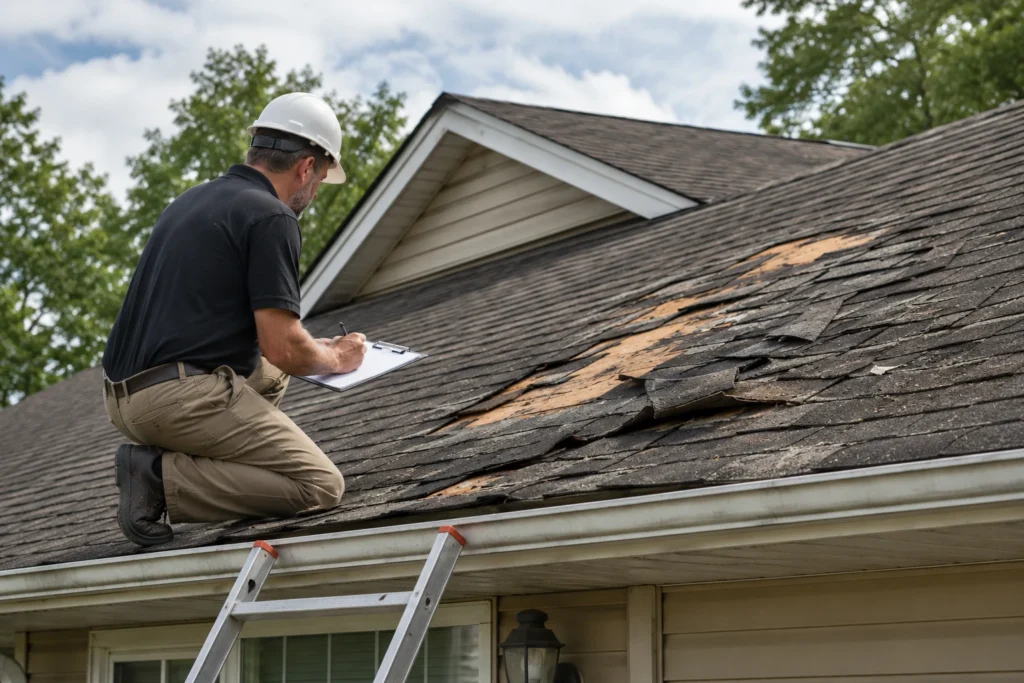
Small roofing problems rarely stay small. That is the challenge. A single overlooked issue can trigger a chain reaction throughout the home.
Water Damage Spreads Quickly
Water follows gravity. Then it follows opportunity.
Once moisture enters the building envelope, it can affect:
- Drywall
- Flooring
- Framing
- Insulation
- Electrical systems
Repair costs often increase dramatically when water damage expands beyond the roof itself.
Structural Components Can Deteriorate
Wood rot does not happen overnight. But it does happen.
Unchecked moisture exposure gradually weakens:
- Roof decking
- Rafters
- Trusses
- Fascia boards
What began as a minor repair can become a major restoration project.
Mold Growth Becomes a Concern
Mold thrives in dark, damp environments. Attics provide ideal conditions. Once mold develops, remediation expenses can become substantial. More importantly, mold creates additional complications during insurance claim discussions.
Electrical Systems May Be Affected
Water and electricity rarely coexist peacefully.
Roof leaks can eventually impact:
- Wiring
- Junction boxes
- Lighting systems
- HVAC equipment
These secondary damages often increase overall claim values significantly.
What To Do Immediately If Roof Damage Was Missed
If you suspect an insurance adjuster missed roof damage, quick action is important. Not panic. Action.
Document Everything
Start gathering evidence immediately.
Take photographs of:
- Roof surfaces
- Interior stains
- Attic conditions
- Gutters
- Flashing
- Vent systems
Take more photographs than you think you need. You can always ignore unnecessary images later.
Create a Timeline
A clear timeline helps establish claim credibility.
Include:
- Storm date
- Initial inspection date
- Settlement date
- Discovery date of additional damage
- Contractor findings
Organization strengthens your position.
Save Every Communication
Maintain records of:
- Emails
- Letters
- Inspection reports
- Estimates
- Photographs
- Repair invoices
Claims often become documentation battles. The homeowner with better records frequently holds the stronger position.
The Importance of Getting an Independent Roof Inspection
One inspection should never be the final word. Especially when substantial money is involved. Independent inspections often reveal information that was not included in the original assessment. A qualified roofing professional or independent inspector can evaluate the property without relying on the original insurance estimate. This additional perspective often proves valuable. In some cases, it becomes the turning point that changes the entire claim outcome.
Around this stage of the process, homeowners frequently encounter concepts from highly specialized fields. For example, documentation and analysis often resemble the investigative methods used in complex disciplines such as Hermeneutics, where evidence is carefully interpreted to reach accurate conclusions rather than relying on first impressions alone.
One important phrase often surfaces during these situations: The Watchdogs Behind the Claims. While homeowners may focus on the insurance company and contractor, numerous professionals including engineers, inspectors, consultants, and public adjusters may ultimately influence how additional damage is evaluated and documented. The goal is not to prove someone made a mistake. The goal is to determine whether all storm-related damage has been properly identified and accounted for. More often than many people realize, the answer is no.
Understanding Supplemental Roof Claims
Discovering additional damage after an inspection does not automatically mean the claim is over. Far from it. In many situations, the next step is a supplemental claim.
What Is a Supplemental Claim?
A supplemental claim is a request for additional payment based on damage that was not included in the original estimate. This happens regularly.
In fact, many roofing projects uncover hidden conditions once repairs begin. Roofing systems are layered. Until materials are removed, some damage simply cannot be seen. A supplement allows those newly discovered issues to be documented and presented for consideration.
Why Supplemental Claims Are Common
Many homeowners are surprised when contractors mention supplements. They shouldn’t be.
Common reasons supplements occur include:
- Hidden decking damage
- Additional hail impacts
- Moisture intrusion
- Code-required upgrades
- Material matching concerns
- Previously concealed structural issues
The key is documentation. Every additional repair item should be supported by evidence.
Situations That Frequently Trigger Supplements
Not every supplement involves major structural damage. Sometimes the issue is relatively straightforward.
Examples include:
| Supplemental Item | Why It May Be Missed Initially |
| Roof decking replacement | Hidden beneath shingles |
| Underlayment damage | Not visible during inspection |
| Flashing replacement | Concealed behind materials |
| Vent repairs | Damage difficult to detect |
| Moisture intrusion | Develops after storm event |
| Code upgrades | Not evaluated initially |
A properly prepared supplement often helps correct situations where an insurance adjuster missed roof damage during the original inspection.
Building Code Requirements That May Increase Claim Value
Roofing claims are not simply about replacing damaged materials. They also involve compliance. Building codes evolve over time. A roof installed fifteen years ago may not meet current requirements. That matters.
Deck Renailing Requirements
Many jurisdictions require decking attachment upgrades during roof replacement projects. If the roof deck does not meet current fastening standards, additional work may be necessary. Those costs can become significant.
Underlayment Requirements
Modern roofing codes frequently require specific underlayment systems. These materials improve water resistance and storm performance. If the original roof lacks these protections, replacement may trigger upgrade requirements.
Ventilation Standards
Proper attic ventilation affects:
- Roof longevity
- Energy efficiency
- Moisture management
Insufficient ventilation may require correction during restoration.
Drip Edge Requirements
Drip edge installation has become mandatory in many jurisdictions. Older roofs often lack this component. When replacement occurs, code requirements may necessitate installation.
Flashing Improvements
Flashing standards have changed considerably over the years. Updated flashing systems help prevent water intrusion around vulnerable roof penetrations. Failure to account for these upgrades can create inaccurate estimates.
Why Older Roofs Create Additional Challenges
Older roofing systems frequently reveal hidden deficiencies during repairs. That does not mean the roof was failing before the storm. However, restoration often uncovers conditions that must be addressed to complete repairs properly. This is another reason why an insurance adjuster missed roof damage situation can result in supplemental discussions later in the process.
How to Challenge an Incomplete Insurance Estimate
Receiving an estimate does not mean you must automatically accept it. Review it carefully. Line by line.
Review Every Item
Look beyond the total amount. Focus on scope.
Ask questions such as:
- Are all damaged areas included?
- Are all roof components listed?
- Were permit costs considered?
- Are code upgrades addressed?
- Is debris removal included?
Small omissions add up quickly.
Compare Contractor Estimates
Independent contractor estimates often reveal differences in repair scope. Those differences deserve attention.
When comparing estimates, focus on:
- Materials
- Quantities
- Labor
- Code items
- Roofing accessories
The goal is not to find the highest number. The goal is to determine which estimate most accurately reflects necessary repairs.
Submit Additional Documentation
Evidence drives outcomes. Helpful documentation may include:
- Photographs
- Drone imagery
- Contractor reports
- Engineering evaluations
- Moisture readings
- Material manufacturer information
Strong evidence often changes conversations.
Request a Reinspection
If substantial additional damage is discovered, requesting a reinspection may be appropriate.
Reinspections provide opportunities to:
- Review new evidence
- Discuss missed items
- Clarify repair needs
- Update estimates
Many claim disputes are resolved during this stage.
Escalate When Necessary
Not every disagreement resolves immediately. If legitimate differences remain, additional review options may be available depending on the policy and claim circumstances. The important point is simple. A first estimate is not always the final estimate.
When Should You Hire a Public Adjuster?
Some claims move smoothly. Others do not. Knowing when to seek assistance can save time, frustration, and potentially significant money.
Signs Professional Help May Be Needed
Certain situations deserve closer attention.
For example:
- Large claim value discrepancies
- Repeated claim delays
- Significant supplemental disputes
- Complex storm damage
- Partial claim denials
- Extensive roofing systems
These scenarios often benefit from professional review.
How Public Adjusters Help
Public adjusters represent policyholders. Not insurance companies.
Their role typically includes:
- Reviewing policy language
- Evaluating damage documentation
- Analyzing estimates
- Preparing claim presentations
- Supporting negotiations
This assistance can be particularly valuable when an insurance adjuster missed roof damage and the claim requires additional documentation.
Benefits of Professional Representation
Every claim is different.
However, experienced claim professionals often provide:
- Objective damage assessments
- Detailed estimate reviews
- Supplemental claim preparation
- Organized documentation
- Technical claim support
The goal is not conflict. The goal is accuracy.
Roof Damage Claims in Prosper: Local Considerations for Homeowners
Weather in Prosper can be unpredictable. One season may pass quietly. The next may produce severe hailstorms, high winds, and significant property damage. Local homeowners know this well.
Severe Weather Risks in Prosper
North Texas experiences a wide range of weather events capable of damaging roofing systems.
These include:
- Hailstorms
- Straight-line winds
- Severe thunderstorms
- Heavy rainfall
- Flying debris impacts
Many roofing claims originate from these events.
Hailstorm Activity and Roofing Claims
Hail remains one of the leading causes of residential roof claims. The challenge is that hail damage varies significantly. Some impacts are obvious. Others require trained evaluation. Bruising, granule displacement, and shingle fractures can be difficult to identify from ground level. As a result, some homeowners in Prosper discover additional damage only after contractors begin repair work.
Wind Damage Challenges
Wind damage often appears less dramatic than hail damage. However, appearances can be deceiving.
Wind may:
- Break seal strips
- Lift shingles
- Damage flashing
- Create water entry points
These issues frequently worsen over time if left unresolved.
Why Prosper Homeowners Should Act Quickly
Documentation becomes harder as time passes. Weather changes. Repairs occur. Evidence disappears. Prompt inspections and detailed recordkeeping help preserve critical information. Homeowners who act quickly generally place themselves in stronger positions when additional damage is discovered.
The Value of Thorough Documentation in Prosper Roof Claims
Good documentation creates clarity. Great documentation creates leverage. Photographs, inspection reports, contractor evaluations, and communication records all contribute to a stronger claim file. For many homeowners in Prosper, these records become invaluable when addressing supplemental damage issues.
Mistakes Homeowners Should Avoid
Claim outcomes are often influenced by what happens after the storm. Avoiding common mistakes can make a significant difference.
Accepting the First Estimate Without Review
Many people assume the first estimate is complete. Sometimes it is. Sometimes it isn’t. Careful review remains essential.
Waiting Too Long to Investigate Concerns
Delays create problems. Evidence becomes harder to verify. Additional deterioration may occur. Questions become more difficult to answer. When concerns arise, address them promptly.
Failing to Document Damage
Memory fades.Photographs do not. Visual documentation remains one of the most valuable forms of claim evidence.
Throwing Away Damaged Materials
Whenever possible, retain damaged materials until claim issues are resolved. They may serve as useful evidence later.
Hiring Inexperienced Contractors
Not all inspections are equal. Choose professionals with relevant roofing and storm damage experience. Qualifications matter. Documentation quality matters. Attention to detail matters.
Ignoring New Signs of Water Intrusion
A small ceiling stain may not seem urgent. Neither does a musty odor. Yet both can indicate active moisture issues. Address these warning signs immediately.
Final Thoughts
Few homeowners expect problems after an insurance inspection. After all, the inspection is supposed to identify the damage. Yet situations where an insurance adjuster missed roof damage occur more often than many property owners realize. The important thing is not assigning blame. It is ensuring the damage is fully identified and properly documented.
If additional issues are discovered, act quickly. Gather evidence. Obtain independent evaluations. Preserve records. Review estimates carefully. Request supplements when appropriate. Most importantly, do not assume the first estimate tells the entire story. Roof systems are complex. Storm damage can be hidden.
And the financial consequences of overlooked damage can be substantial. Whether the issue involves hail impacts, wind damage, flashing failures, moisture intrusion, or concealed decking deterioration, homeowners who stay proactive often achieve better claim outcomes. When an insurance adjuster missed roof damage, knowledge becomes one of the most valuable tools available. The sooner that knowledge is applied, the better positioned homeowners will be to protect both their property and their investment.
FAQs
Yes. Many insurance policies allow supplemental claims when additional storm-related damage is discovered after the initial inspection.
New leaks, contractor findings, expanding ceiling stains, or missing repair items in the estimate can all indicate overlooked damage.
Document everything with photos and notes, then arrange an independent roof inspection to verify the extent of the damage.
In many cases, yes, if the damage is related to the original covered loss and is properly documented.
Deadlines vary by policy and state, so review your insurance documents and notify your carrier as soon as possible.
Yes. Experienced roofing contractors often discover concealed damage during inspections or when repair work begins.
A supplemental claim is a request for additional compensation when storm-related damage was not included in the original estimate.
If you have evidence of additional damage, requesting a reinspection is often a reasonable next step to update the claim.
Consider hiring a public adjuster if the claim is underpaid, disputed, delayed, or involves significant roof damage.
No. Many claims are resolved through documentation, supplemental estimates, and reinspections without escalating into a formal dispute.