
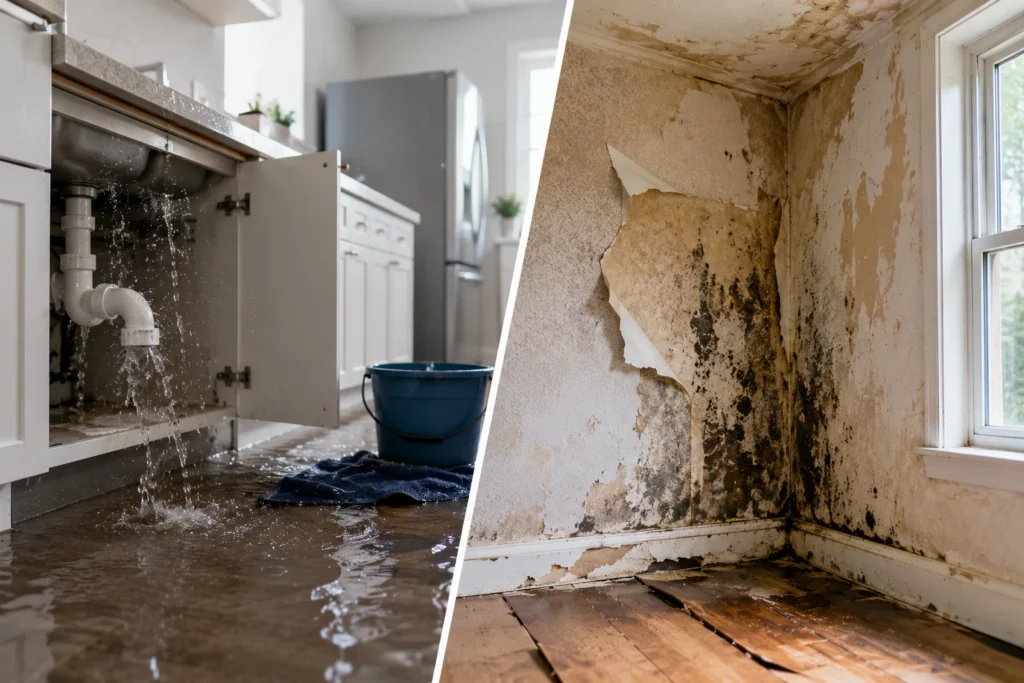
Water damage is one of the most common reasons homeowners file insurance claims. Yet many claims become complicated because property owners do not fully understand the distinction between Sudden vs Gradual Water Damage. That distinction matters. In fact, it can determine whether an insurance company pays thousands of dollars for repairs or denies coverage entirely. A burst pipe that floods a home overnight is very different from a slow leak that damages drywall over several months. While both situations involve water, insurance policies often treat them differently. Consequently, understanding how insurers classify damage can help homeowners avoid surprises during the claims process.
Many property owners discover this difference only after receiving a denial letter. Unfortunately, by that point, significant damage may already exist, and options can become more limited. Therefore, learning how water damage is evaluated before a loss occurs can make a meaningful difference. For homeowners in Prosper, water damage claims can arise from plumbing failures, severe storms, appliance malfunctions, and hidden leaks. Because every claim involves unique circumstances, understanding the fundamentals helps property owners protect their interests when unexpected losses occur.
Insurance investigations often involve detailed examinations of timelines, maintenance records, repair histories, and property conditions. Similarly, professionals may use specialized techniques to determine how long moisture has been present. One scientific concept sometimes referenced in forensic investigations is Dendrochronology, which involves analyzing tree-ring patterns to determine age and historical events. While not directly related to insurance claims, it demonstrates how experts use evidence and timelines to reach conclusions. The reality is simple. Water damage rarely becomes less expensive with time. The sooner homeowners understand what happened, document the loss, and take appropriate action, the better positioned they are to navigate the insurance process successfully.
What Is Sudden Water Damage?
Sudden water damage occurs unexpectedly and without warning. In most cases, it results from an accidental event that happens within a short period of time. The damage is usually noticeable immediately, which often makes the cause easier to identify. Insurance companies generally refer to these situations as “sudden and accidental” losses.
Common examples include:
- Burst water supply lines
- Broken washing machine hoses
- Water heater failures
- Overflowing toilets
- Accidental sink overflows
- Sudden roof leaks during storms
- HVAC system drain failures
Imagine returning home after work and discovering several inches of water throughout your first floor because a pipe burst while you were away. The event happened quickly. The damage is obvious. The timeline is clear. That scenario typically fits the definition of sudden water damage. Because the event occurs unexpectedly, insurance policies frequently provide coverage, assuming no exclusions apply and the homeowner responds appropriately.
However, coverage is never automatic.
Insurance companies still investigate:
- Cause of loss
- Maintenance history
- Extent of damages
- Mitigation efforts
- Timeline of discovery
Consequently, documentation becomes extremely important from the moment damage is discovered.
Why Insurance Companies Often Cover Sudden Water Damage
Insurance policies are designed to protect against unforeseen events. A burst pipe is generally considered accidental. A failed water heater is often accidental. An appliance hose rupture is usually accidental. Because these incidents occur suddenly, insurers often recognize them as covered causes of loss under many homeowner policies.
That does not mean every claim is approved without scrutiny. Adjusters frequently examine whether the homeowner acted responsibly after discovering the problem. For example, if a homeowner notices active flooding but waits several days before taking action, additional damage may not receive the same consideration. Prompt action matters.
The first steps should typically include:
- Stop the source of water if possible.
- Protect unaffected property.
- Document all visible damage.
- Contact mitigation professionals.
- Notify the insurance company.
Those actions create a stronger foundation for the claim process.
What Is Gradual Water Damage?
Unlike sudden events, gradual water damage develops slowly. Sometimes it takes weeks. Sometimes months. Occasionally years. Instead of resulting from a single incident, gradual water damage typically stems from ongoing moisture intrusion or hidden leaks that worsen over time.
Common examples include:
- Slow plumbing leaks behind walls
- Dripping pipe connections
- Long-term roof leaks
- Shower pan failures
- Cracked caulking around tubs
- Chronic appliance leaks
- Condensation-related moisture issues
These problems often begin quietly. A tiny drip inside a wall cavity may seem insignificant. Yet over time, that small leak can saturate insulation, damage framing, weaken drywall, and create conditions favorable for mold growth. The challenge is that homeowners frequently do not notice these issues immediately. By the time visible signs appear, substantial damage may already exist.
Warning Signs of Gradual Water Damage
Many homeowners overlook early warning signals because they seem minor. However, recognizing these indicators early can prevent extensive damage.
Watch for:
Discoloration
Brown, yellow, or dark stains often suggest ongoing moisture exposure.
Peeling Paint
Paint rarely peels without a reason. Moisture is often the culprit.
Soft Drywall
Drywall should feel firm. If it feels soft or spongy, water intrusion may be present.
Warped Flooring
Wood, laminate, and engineered flooring often react noticeably to prolonged moisture.
Musty Odors
Persistent odors frequently indicate hidden moisture issues.
Mold Growth
Visible mold can signal ongoing water exposure somewhere within the structure.
The earlier these signs are addressed, the better. Ignoring them rarely improves the situation.
Why Gradual Water Damage Creates Coverage Challenges
Insurance policies generally exclude maintenance-related issues. That creates challenges when damage develops slowly. From an insurer’s perspective, a leak that existed for months may represent deterioration rather than an unexpected event. As a result, claims involving gradual water damage frequently face increased scrutiny.
Insurance companies may argue:
- The damage occurred over an extended period.
- Maintenance could have prevented the loss.
- Warning signs were present.
- Wear and tear contributed to the damage.
- The issue was not sudden or accidental.
These arguments often become the foundation for coverage disputes. This is one reason why Sudden vs Gradual Water Damage remains such an important distinction. The classification can directly affect claim eligibility.
The Gray Area That Creates Disputes
Not every claim fits neatly into one category. In fact, many of the most complicated claims involve elements of both sudden and gradual damage. Consider a hidden pipe that suddenly bursts inside a wall. The burst itself may be sudden. However, moisture remains trapped inside the wall cavity for several weeks before discovery. What portion of the damage resulted from the burst? What portion developed afterward? Those questions become central to the claim. Similarly, a storm may create a roof opening. Rainwater enters immediately.
Yet hidden moisture remains behind walls for months. Was the damage sudden? Gradual? Both? These situations often require extensive investigation and documentation. Consequently, homeowners should never assume insurance companies will automatically interpret the circumstances favorably.
How Experts Determine the Cause of Water Damage
Determining whether damage is sudden or gradual often involves detailed analysis.
Professionals may evaluate:
- Moisture levels
- Building materials
- Water migration patterns
- Staining characteristics
- Mold development
- Corrosion indicators
- Repair histories
Advanced tools frequently assist investigations.
These tools may include:
- Moisture meters
- Thermal imaging cameras
- Leak detection systems
- Infrared technology
The goal is establishing a reliable timeline.
Because insurance decisions frequently depend on causation, the investigation process can become surprisingly technical. This is also where homeowners often begin asking an important question: Should I Use a Public Adjuster? When significant damage exists or coverage questions arise, many property owners seek professional assistance to better understand policy language, document losses, and present evidence supporting their claims.
How Homeowners Can Properly Document Water Damage
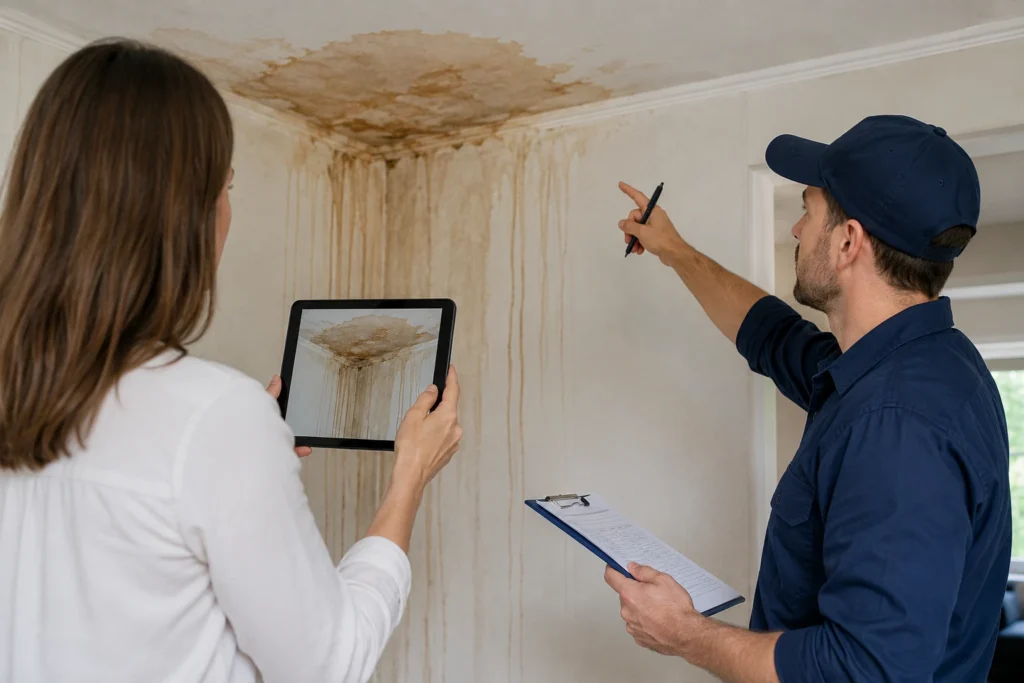
When water damage occurs, documentation can become one of the most valuable tools available to a homeowner. Insurance companies rely heavily on evidence. The stronger the evidence, the easier it becomes to establish what happened and when it happened. Therefore, homeowners should begin documenting conditions immediately after discovering damage.
Start With Photographs and Video
Take wide-angle photographs first. Show the overall affected area.
Then move closer and capture detailed images of:
- Water stains
- Damaged flooring
- Wet drywall
- Damaged furniture
- Personal property losses
- Plumbing failures
- Appliance malfunctions
Video recordings can also provide useful context. Narrating the conditions while recording often helps establish the timeline later.
Save All Invoices and Reports
Keep copies of:
- Emergency mitigation invoices
- Plumbing reports
- Leak detection reports
- Contractor estimates
- Drying equipment invoices
- Mold inspection reports
These records can help demonstrate both the cause of loss and the actions taken to minimize additional damage.
Maintain a Damage Journal
A simple written timeline can become extremely valuable.
Record:
- Date damage was discovered
- Who was contacted
- When inspections occurred
- Repairs performed
- Conversations with insurance representatives
Small details often become important months later.
Common Water Damage Claim Disputes
Many homeowners assume water damage claims are straightforward. Unfortunately, they often are not. Coverage disputes arise regularly because insurers and policyholders may interpret the facts differently. Understanding common disagreements can help homeowners prepare more effectively.
“The Damage Happened Over Time”
This is one of the most frequent arguments raised in water damage claims. An insurer may conclude that evidence suggests long-term leakage rather than a sudden event. The homeowner may disagree. When this occurs, supporting documentation becomes critical. Photographs, expert reports, and maintenance records can help establish the actual timeline.
Wear and Tear Arguments
Insurance policies generally do not cover normal deterioration.
As a result, insurers sometimes attribute damage to:
- Aging plumbing
- Corrosion
- Deteriorated seals
- Long-term maintenance issues
The challenge is that a worn component can still fail suddenly. For example, an aging supply line may rupture unexpectedly. The pipe itself may not be covered, but resulting water damage could still be covered under many policies. That distinction matters.
Mold-Related Disputes
Mold frequently becomes a secondary issue in water damage claims.
Insurance companies often investigate:
- How long moisture was present
- Whether mold resulted from a covered event
- Whether mitigation occurred promptly
Coverage limitations for mold vary significantly between policies. Consequently, homeowners should carefully review their policy language whenever mold becomes part of a claim.
The Financial Impact of Misclassifying Water Damage
The distinction between Sudden vs Gradual Water Damage is not merely technical. It can have major financial consequences. Repair costs can escalate quickly. A relatively small leak may ultimately result in extensive restoration expenses.
Direct Repair Costs
Water damage commonly affects:
- Drywall
- Flooring
- Insulation
- Cabinets
- Trim
- Electrical systems
Replacing these materials can become expensive. The larger the affected area, the higher the costs typically become.
Hidden Damage Costs
Visible damage rarely tells the entire story. Water often travels beyond the area where it first appears.
Moisture can spread through:
- Wall cavities
- Subfloors
- Insulation
- Ceiling spaces
Hidden damage may remain undetected until demolition begins. As a result, repair budgets frequently increase after restoration starts.
Potential Claim Denials
Perhaps the greatest financial risk comes from coverage disputes. If damage is classified as gradual rather than sudden, portions of the claim may be denied.
Homeowners may then become responsible for:
- Structural repairs
- Mold remediation
- Material replacement
- Reconstruction expenses
These costs can quickly reach thousands or even tens of thousands of dollars.
Why Water Damage Is Often More Extensive Than It Appears
One of the biggest mistakes homeowners make is underestimating the scope of damage. Water rarely stays where it first lands. Instead, it follows the path of least resistance. It moves through cracks. It travels beneath flooring. It enters insulation. It migrates behind walls. By the time visible damage appears, moisture may already exist throughout multiple areas of the property.
Moisture Migration
Water behaves predictably. Gravity pulls it downward. Capillary action can draw moisture upward into porous materials. Consequently, water intrusion can affect areas far from the original source. This is why professional inspections remain so important.
Structural Concerns
Long-term moisture exposure can weaken building materials.
Potential issues include:
- Wood rot
- Drywall deterioration
- Fastener corrosion
- Subfloor damage
Although these conditions may not be immediately visible, they can significantly increase restoration costs.
Electrical Risks
Water and electrical systems create a dangerous combination.
Water intrusion may affect:
- Wiring
- Outlets
- Circuit panels
- Lighting systems
Whenever electrical components are exposed to water, professional evaluation is recommended. Safety should always come first.
How a Public Adjuster Can Help With Water Damage Claims
Water damage claims often involve more than simply reporting a loss. Policy interpretation, documentation, inspections, and negotiations can all influence outcomes. This is where public adjusters may provide assistance. Unlike insurance company adjusters, public adjusters work on behalf of policyholders. Their role typically involves evaluating damages, reviewing coverage, and supporting the claim process.
Damage Evaluation
Public adjusters often conduct detailed reviews of:
- Structural damage
- Personal property losses
- Moisture-related impacts
- Repair requirements
Their goal is to develop a comprehensive understanding of the loss.
Policy Analysis
Insurance policies can be complex. Coverage frequently depends on specific wording.
Public adjusters often review:
- Coverage provisions
- Exclusions
- Endorsements
- Limitations
This analysis helps identify applicable benefits.
Claim Documentation
Thorough documentation strengthens claim presentations.
Public adjusters frequently assist with:
- Damage inventories
- Photographic evidence
- Repair estimates
- Supporting reports
The objective is presenting a clear and well-supported claim.
Negotiation Support
Disagreements sometimes arise regarding scope, pricing, or coverage. Public adjusters may help facilitate discussions and provide additional documentation when necessary.
Water Damage Risks Facing Homeowners in Prosper
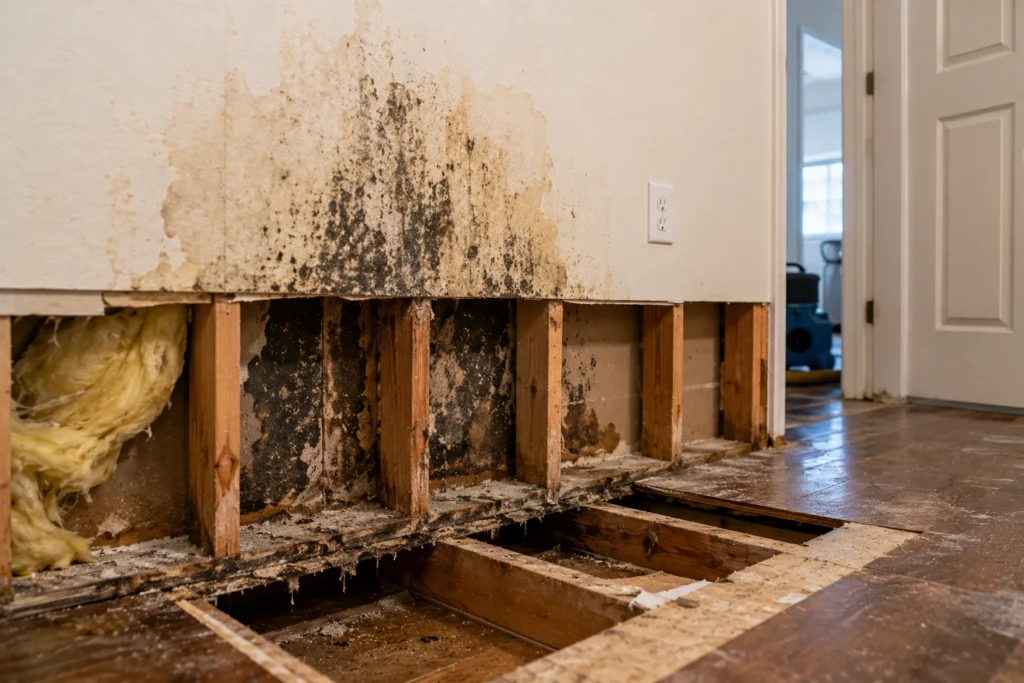
Homeowners in Prosper face several water damage risks throughout the year. Some losses stem from weather events. Others originate inside the home itself. Understanding these risks can help property owners respond more effectively when problems occur.
Plumbing System Failures
Many water damage claims begin with plumbing problems.
Common examples include:
- Burst pipes
- Failed fittings
- Water heater leaks
- Supply line ruptures
These events often occur unexpectedly and may qualify as sudden losses.
Appliance-Related Water Damage
Modern homes rely on numerous water-connected appliances.
Potential sources include:
- Washing machines
- Dishwashers
- Refrigerators
- Water filtration systems
Even small failures can release substantial amounts of water.
Severe Weather Events
Storms can also contribute to water damage. Heavy rainfall, wind-driven rain, and roof damage may allow water intrusion into a structure. Prompt inspection following severe weather helps identify problems before they worsen. For homeowners in Prosper, quick action following storms can often prevent secondary damage from developing.
Preventing Water Damage Before It Starts
While not every water loss is preventable, many can be reduced through routine maintenance and early detection. Small investments today can prevent major expenses later.
Inspect Plumbing Regularly
Look for:
- Corrosion
- Moisture stains
- Loose fittings
- Dripping valves
Addressing minor issues early often prevents larger failures.
Monitor Appliances
Check supply lines periodically. Replace aging hoses before they fail. Many sudden water losses originate from inexpensive components that go unnoticed.
Maintain Roofing Systems
Roof inspections help identify:
- Missing shingles
- Damaged flashing
- Sealant failures
- Drainage issues
Routine maintenance reduces the likelihood of water intrusion.
Install Leak Detection Devices
Modern leak detection technology can provide early warning when moisture is detected. Some systems can even shut off water automatically. These devices are increasingly popular because they help minimize damage severity.
Respond Quickly to Minor Leaks
A small leak rarely remains small forever. Addressing issues immediately helps prevent gradual deterioration and larger repair expenses.
Understanding the Bigger Picture
When evaluating Sudden vs Gradual Water Damage, homeowners should remember that insurance companies focus heavily on evidence. The timeline matters. The cause matters. Documentation matters. Even when two properties experience similar damage, claim outcomes may differ dramatically based on the available evidence.
This is why preparation is so important. Property owners who understand their policies, maintain their homes, and document losses carefully often place themselves in a stronger position during the claims process. The distinction between Sudden vs Gradual Water Damage also influences how restoration professionals approach repairs. Sudden losses often require rapid drying and emergency mitigation. Gradual losses may require more extensive investigation to identify the full extent of hidden damage. Recognizing those differences helps homeowners make informed decisions when problems arise.
Conclusion
The difference between Sudden vs Gradual Water Damage may seem simple at first glance, but it plays a significant role in insurance claims, repair costs, and coverage decisions. Sudden water damage generally results from unexpected events such as burst pipes, appliance failures, or accidental overflows. Gradual water damage, on the other hand, develops over time through hidden leaks, moisture intrusion, or long-term deterioration. Insurance companies often evaluate these situations differently. Consequently, understanding the distinction can help homeowners protect their rights and avoid costly misunderstandings.
The most important steps remain consistent regardless of the cause:
- Act quickly.
- Document thoroughly.
- Preserve evidence.
- Seek professional evaluations when necessary.
- Understand your policy coverage.
For property owners in Prosper, water damage can originate from numerous sources, ranging from plumbing failures to severe weather events. Knowing how insurers evaluate Sudden vs Gradual Water Damage can make the claims process less stressful and help homeowners respond confidently when unexpected losses occur. Ultimately, the sooner damage is identified and addressed, the better the chances of limiting repairs, protecting property value, and achieving a fair claim outcome.
FAQs
Sudden water damage occurs unexpectedly, while gradual water damage develops over time due to ongoing leaks or moisture intrusion.
In many cases, sudden and accidental water damage is covered, but coverage depends on the policy terms and circumstances of the loss.
Insurers often view gradual water damage as a maintenance issue, wear and tear, or a preventable condition that developed over time.
Sometimes. Coverage may apply if the leak was hidden and the resulting damage was discovered only after it occurred.
Signs such as mold growth, staining, corrosion, and material deterioration may indicate long-term moisture exposure, though professional evaluation is often needed.
Stop the water source if possible, document the damage, begin mitigation efforts, and notify your insurance company promptly.
No. Some mold may be covered if it results directly from a covered water loss, although many policies have limitations on mold coverage.
Reporting requirements vary by policy, but it is generally best to report water damage as soon as it is discovered.
Yes. Hidden moisture can damage framing, insulation, drywall, and other building materials if left untreated.
A public adjuster may help evaluate damages, review policy language, and assist with documentation when significant losses or claim disputes arise.