

A fire can change everything in a matter of minutes. Walls can be repaired. Roofs can be rebuilt. Floors can be replaced. Yet for many homeowners, the most difficult decisions come when evaluating personal belongings. That’s where Contents Cleaning vs Replacement After a Fire becomes one of the most important conversations in the entire insurance claims process. After the flames are extinguished, homeowners are often surprised by how much damage remains. Smoke settles into fabrics. Soot coats surfaces. Heat weakens materials. Water used to extinguish the fire creates an entirely separate layer of destruction. Suddenly, every chair, television, photograph, and piece of clothing must be evaluated. Should it be cleaned? Or should it be replaced?
The answer isn’t always obvious. In many cases, an item that appears ruined can be restored by trained professionals. In others, an item that looks relatively unharmed may contain hidden contamination that makes replacement the smarter option. Understanding the difference can significantly affect both recovery and insurance compensation. Interestingly, many restoration professionals rely on principles similar to those used in complex fields such as spectroscopy, where hidden contaminants and material changes can be identified beyond what the human eye can easily detect.
For homeowners in Prosper, understanding these distinctions can help prevent costly mistakes after a fire loss. Insurance companies, restoration contractors, and public adjusters may all have different perspectives regarding what should be salvaged and what should be replaced. Knowing how these decisions are made puts you in a much stronger position during the claims process. Let’s break down exactly how contents restoration works and when replacement may be the better choice.
Understanding Contents Damage After a Fire
Before discussing restoration methods, it’s important to understand what insurance companies mean when they refer to “contents.”
Contents generally include nearly everything you own inside the home:
- Furniture
- Clothing
- Electronics
- Appliances
- Artwork
- Jewelry
- Photographs
- Documents
- Collectibles
- Household goods
- Children’s toys
- Sporting equipment
Unlike structural damage, contents losses can be difficult to evaluate because every item reacts differently to fire conditions.
How Fire Actually Damages Personal Property
Many homeowners assume fire damage only occurs when flames directly touch an object. Unfortunately, that’s rarely the case. Fire creates several different forms of damage simultaneously.
Direct Flame Damage
This is the most obvious type. Items may be burned, melted, charred, or completely destroyed. Direct flame damage often makes replacement unavoidable.
Smoke Damage
Smoke travels far beyond the fire itself. A kitchen fire can leave smoke contamination throughout an entire home. Smoke particles settle into fabrics, electronics, books, and porous materials.
Soot Contamination
Soot consists of tiny particles produced during combustion.
These particles can:
- Stain surfaces
- Cause corrosion
- Damage electronics
- Create persistent odors
- Trigger respiratory concerns
Heat Damage
High temperatures can affect belongings even without direct flames. Plastic may warp. Wood may crack. Electronic components may become unstable. Artwork may discolor.
Water Damage
Firefighters save homes every day. However, the water used during suppression efforts can create additional damage to contents. Furniture absorbs moisture. Documents become saturated. Mold risks increase rapidly. This is why Contents Cleaning vs Replacement After a Fire requires evaluating more than just burn marks.
Why Some Damage Remains Hidden
One of the biggest mistakes homeowners make is judging damage based solely on appearance. Looks can be deceiving. A sofa may appear clean but contain smoke residue deep inside the cushions. A laptop may power on initially but fail weeks later due to corrosion. A family photo album may seem intact while microscopic contamination continues degrading the images. This hidden damage often becomes a major point of disagreement during insurance claims. What appears salvageable today may not remain functional tomorrow.
The Goal of Contents Restoration
Restoration companies do not automatically throw everything away. In fact, their first objective is often to determine what can safely be restored.
Why? Because restoration frequently costs less than replacement. However, cost savings should never outweigh safety, functionality, or long-term reliability.
Why Cleaning Is Often Considered First
There are several reasons restoration professionals attempt cleaning when possible.
Financial Savings
Replacing hundreds of household items can become extremely expensive. Professional cleaning may restore many items at a fraction of replacement cost.
Preservation of Sentimental Items
Some possessions cannot truly be replaced.
Examples include:
- Family heirlooms
- Wedding albums
- Military memorabilia
- Children’s artwork
- Historical documents
For these items, restoration may provide emotional value that extends far beyond monetary value.
Faster Recovery
Certain household goods can be returned quickly through professional restoration programs. Waiting for replacements, especially custom items, can take months.
Environmental Benefits
Restoring usable property reduces waste. Thousands of pounds of debris can be diverted from landfills through effective restoration efforts.
How Professional Contents Cleaning Works
The restoration process is much more sophisticated than ordinary cleaning. Professional restoration companies often follow a detailed workflow.
Step One: Inventory and Documentation
Every item is cataloged. Photographs are taken. Condition reports are prepared. Barcoding systems may be used to track belongings. This documentation becomes important later if disputes arise.
Step Two: Pack-Out Services
Many contents are removed from the property. This process is known as a pack-out. Items are transported to specialized restoration facilities where cleaning can occur under controlled conditions.
Step Three: Damage Classification
Technicians categorize items according to:
- Type of contamination
- Material composition
- Restoration potential
- Safety concerns
Each category receives different treatment methods.
Step Four: Cleaning and Deodorization
Specialized techniques remove contaminants, odors, and residues. The cleaning method depends on the item. No single solution works for everything.
Common Restoration Technologies
Modern restoration companies use impressive tools. Many homeowners never realize how advanced these systems have become.
Ultrasonic Cleaning
Ultrasonic systems use microscopic bubbles generated through sound waves. These bubbles remove contaminants from intricate surfaces that traditional cleaning cannot easily reach.
This technique works particularly well for:
- Electronics components
- Decorative items
- Metal objects
- Small household goods
Thermal Fogging
Thermal fogging helps neutralize smoke odors. The process introduces deodorizing particles that penetrate areas smoke originally reached.
Ozone Treatment
Ozone treatments are sometimes used to address persistent odors. When performed correctly, ozone can break down odor-causing compounds trapped within materials.
HEPA Filtration
High-efficiency filtration systems remove airborne contaminants during restoration. This improves air quality while reducing secondary contamination.
Factors That Determine Whether an Item Can Be Cleaned or Replaced
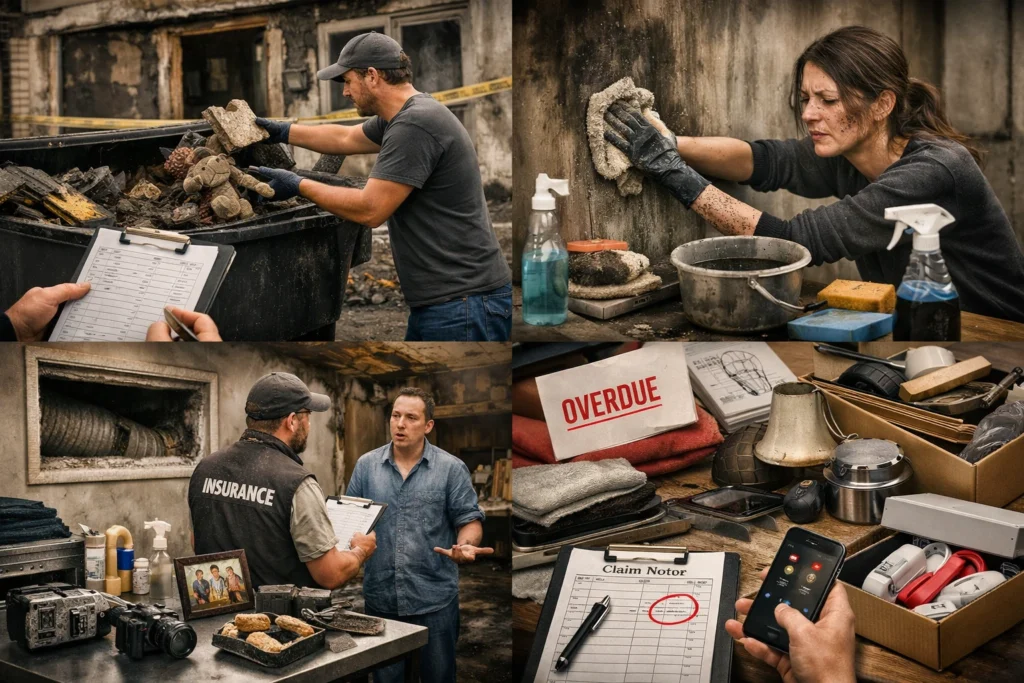
Every item must be evaluated individually. The same fire may leave one object restorable while making another a total loss. Several factors influence the decision.
Factor #1: Extent of Physical Damage
Physical damage remains one of the most obvious considerations. Surface-level soot can often be cleaned. Structural damage usually cannot.
For example:
| Condition | Restoration Potential |
| Light soot residue | Often restorable |
| Minor smoke odor | Often restorable |
| Surface discoloration | Sometimes restorable |
| Severe charring | Usually replacement |
| Melting or warping | Usually replacement |
| Structural weakening | Usually replacement |
When structural integrity has been compromised, replacement often becomes necessary.
Factor #2: Material Type
Different materials respond differently to smoke and heat. Some materials clean exceptionally well. Others trap contamination permanently.
Non-Porous Materials
These materials generally have the highest restoration success rates.
Examples include:
- Glass
- Stainless steel
- Aluminum
- Ceramic
- Certain hard plastics
Because contaminants remain primarily on the surface, cleaning is often effective.
Semi-Porous Materials
These materials present moderate challenges.
Examples include:
- Finished wood
- Leather
- Composite surfaces
Contamination may penetrate beyond the surface, requiring specialized treatment.
Highly Porous Materials
These materials frequently create the greatest restoration challenges.
Examples include:
- Mattresses
- Upholstered furniture
- Insulation
- Stuffed animals
- Thick carpeting
Smoke particles can become deeply embedded, making complete restoration difficult. This is where Contents Cleaning vs Replacement After a Fire often becomes heavily debated between homeowners and insurers.
Factor #3: Health and Safety Concerns
Safety should always take priority over cost. Certain items simply should not be restored if contamination cannot be completely removed.
Examples include:
- Infant products
- Baby mattresses
- Medical devices
- Certain food preparation items
- Open food products
Even if cleaning appears successful, lingering contaminants may create future risks. For many families in Prosper, these health considerations become one of the most important factors when evaluating fire-damaged belongings.
Items That Can Often Be Successfully Cleaned
One of the biggest surprises after a fire is discovering how many belongings can actually be restored. Many homeowners assume smoke exposure automatically means replacement. Not necessarily. Professional restoration companies successfully recover thousands of items every year. The key is identifying which belongings have a realistic chance of being restored safely and effectively.
Furniture
Furniture is often one of the largest categories within a contents claim. Fortunately, many furniture items respond well to professional restoration.
Solid Wood Furniture
Solid wood furniture frequently survives smoke damage better than expected.
Professional restoration may include:
- Soot removal
- Deep cleaning
- Refinishing
- Odor treatment
- Surface repair
High-quality wood furniture is often worth restoring because replacement costs can be substantial.
Metal Furniture
Metal surfaces generally clean well after smoke exposure. Unless heat has caused warping or structural damage, restoration is often successful.
Certain Leather Furniture
Leather presents unique challenges. However, specialized restoration methods can often remove smoke residue and odors while preserving the material.
Clothing and Textiles
Many clothing items can be restored successfully. Speed matters. The longer smoke residue remains in fabrics, the harder it becomes to remove.
Professional textile restoration often includes:
- Specialized detergents
- Odor-neutralizing treatments
- Controlled drying methods
- Multiple cleaning cycles
Items frequently restored include:
- Business attire
- Casual clothing
- Curtains
- Bedding
- Uniforms
However, some fabrics may suffer permanent discoloration.
Electronics
Electronics create some of the most disputed claims. Many devices appear undamaged after a fire. That does not necessarily mean they are safe. Smoke particles contain corrosive compounds that can settle inside sensitive circuitry.
Professional electronics restoration may include:
- Internal inspection
- Component cleaning
- Corrosion prevention
- Functional testing
Commonly evaluated items include:
- Televisions
- Computers
- Gaming systems
- Audio equipment
- Cameras
When restoration occurs quickly, many electronics can be recovered. Delays often increase failure risks.
Kitchenware
Non-porous kitchen items often clean exceptionally well.
Examples include:
- Stainless steel cookware
- Metal utensils
- Glass dishes
- Ceramic serving pieces
Because contaminants remain primarily on the surface, restoration can often return these items to safe use.
Documents and Photographs
Some of the most valuable possessions have little to do with money. Family photographs. Birth certificates. Historical documents. Personal letters. Professional restoration companies may use specialized recovery methods to preserve irreplaceable records. Even severely damaged documents can sometimes be stabilized and recovered.
Items That Often Require Replacement
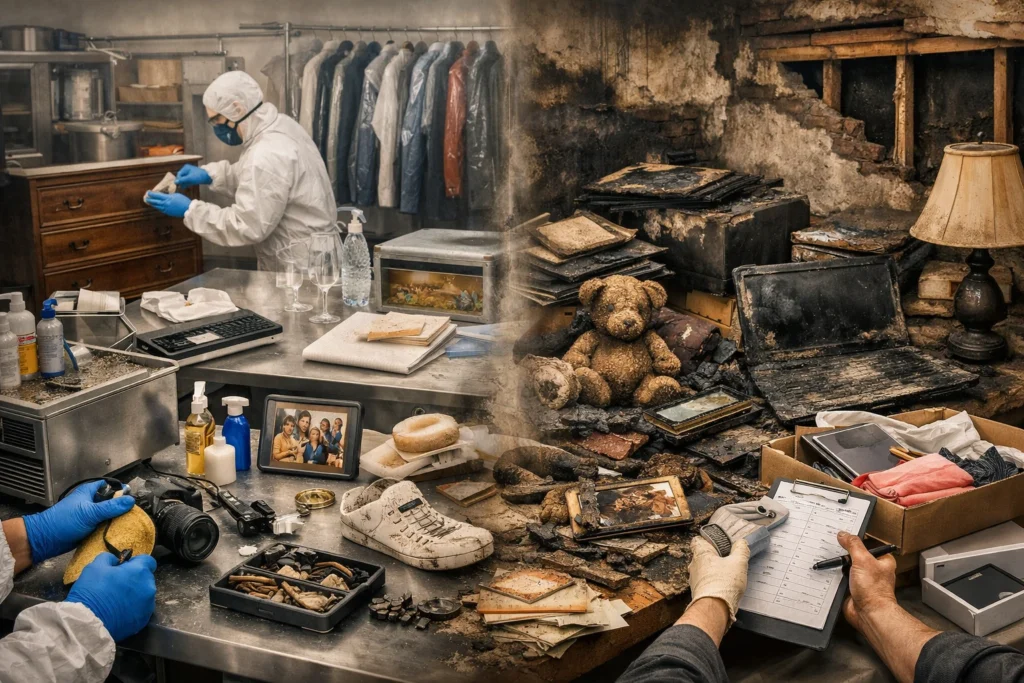
While restoration can be effective, not every item should be saved. In some cases, replacement is clearly the better option.
Mattresses and Pillows
Mattresses are highly porous. Smoke particles penetrate deeply into internal materials. Odors become trapped. Contamination can remain long after surface cleaning. For this reason, mattresses and pillows are frequently replaced rather than restored.
Food and Consumable Products
Food safety standards leave little room for debate.
Items commonly discarded include:
- Open food containers
- Refrigerated products
- Frozen foods
- Pantry items exposed to smoke
- Medicines exposed to contamination
Even sealed products may require evaluation depending on fire conditions.
Cosmetics and Personal Care Products
Heat and smoke can alter cosmetic products. Packaging may become compromised. Contamination may not be visible. Replacement is often the safest choice.
Severely Burned Furniture
Once structural components have been damaged by fire, restoration may no longer be practical.
Warning signs include:
- Charring
- Cracking
- Warping
- Weakening joints
- Material breakdown
Even if appearance can be improved, long-term reliability may be compromised.
Children’s Items
Parents naturally prioritize safety.
Items often replaced include:
- Cribs
- Car seats
- Baby mattresses
- Soft toys
- Feeding accessories
Hidden contamination concerns often outweigh restoration benefits.
Smoke-Damaged Insulation and Similar Materials
Some materials act like giant odor sponges. Insulation is one example. Even when structural damage is minimal, trapped odors may remain for years if contaminated materials are not removed.
The Insurance Company’s Perspective
Insurance companies evaluate contents differently than homeowners. Understandably so. Their focus often centers on whether restoration is economically reasonable.
Why Insurers Frequently Favor Restoration
From a claims perspective, restoration can offer several advantages.
Lower Claim Costs
Cleaning often costs less than replacement. When hundreds of items are involved, the savings can be significant.
Faster Claim Resolution
Restoration may allow claims to close more quickly.
Reduced Replacement Expenses
Supply chain delays and rising prices have increased replacement costs in recent years. As a result, insurers may examine restoration opportunities carefully.
When Insurance Companies Approve Replacement
There are situations where replacement becomes difficult to avoid.
Examples include:
- Total destruction
- Severe contamination
- Safety concerns
- Functional failure
- Restoration costs exceeding replacement value
In these cases, replacement often becomes the logical solution.
Actual Cash Value vs Replacement Cost Coverage
This distinction can dramatically affect a contents claim.
Actual Cash Value (ACV)
Actual Cash Value generally considers depreciation. Older items may receive reduced compensation.
For example:
A five-year-old television worth $1,000 when purchased may have a much lower ACV today.
Replacement Cost Value (RCV)
Replacement Cost coverage typically pays what it costs to replace the item with a comparable new item, subject to policy terms. This often provides significantly greater recovery. Understanding your policy can directly affect decisions involving Contents Cleaning vs Replacement After a Fire.
How Public Adjusters Help Evaluate Contents Claims
Fire claims can become overwhelming. Hundreds or even thousands of individual items may require review. Public adjusters help homeowners navigate that complexity.
Independent Damage Assessment
Insurance company evaluations are important. However, they are not always the only perspective. Independent assessments can identify overlooked damage and hidden contamination.
Identifying Underpaid Contents Claims
Contents inventories often contain errors.
Items may be:
- Missing
- Undervalued
- Misclassified
- Incorrectly depreciated
Careful review can uncover significant differences.
Challenging Improper Restoration Decisions
Sometimes insurers favor restoration when replacement may be more appropriate. A public adjuster can help present evidence supporting replacement when justified.
Supporting Replacement Requests
Strong documentation often includes:
- Expert opinions
- Manufacturer guidance
- Safety concerns
- Cost comparisons
- Functional testing results
The stronger the evidence, the stronger the position.
The Watchdogs Behind the Claims
Many homeowners view public adjusters as advocates who help balance the process. Their role is not to create conflict. Their role is to ensure losses are properly documented and fairly evaluated based on available evidence.
Documentation: The Foundation of a Strong Contents Claim
Few factors influence claim outcomes more than documentation. In many cases, documentation determines whether an item is restored, replaced, or overlooked entirely.
Create a Detailed Inventory
Begin as early as possible. Document every damaged item.
Include:
- Item description
- Brand
- Model number
- Purchase date
- Estimated value
The more detail provided, the easier it becomes to support the claim.
Photograph Everything
Photographs create objective evidence. Take pictures from multiple angles.
Capture:
- Smoke residue
- Burn damage
- Water damage
- Serial numbers
- Manufacturer labels
Visual evidence often becomes extremely valuable later.
Save Receipts and Records
Many homeowners lose track of documentation over time.
Helpful records include:
- Receipts
- Credit card statements
- Warranty information
- Product manuals
- Online order histories
Even partial records can help establish value.
Record Damage Progression
Some damage becomes more apparent over time. Odors may worsen. Corrosion may develop. Electronic failures may appear weeks later. Continue documenting conditions throughout the claims process.
Why Documentation Matters During Negotiations
Claim negotiations depend heavily on evidence.
Detailed records help establish:
- Ownership
- Condition before loss
- Extent of damage
- Restoration feasibility
- Replacement justification
The more complete the documentation, the easier it becomes to support the desired outcome.
Common Mistakes Homeowners Make After a Fire
The hours and days following a fire are stressful. Emotions run high. People want answers immediately. Unfortunately, that urgency sometimes leads to decisions that complicate the insurance claim later. Avoiding a few common mistakes can make a significant difference when evaluating Contents Cleaning vs Replacement After a Fire.
Throwing Away Damaged Items Too Soon
Many homeowners begin cleaning up immediately. That instinct is understandable. However, disposing of damaged belongings before documentation occurs can create major problems. Once an item is gone, proving the extent of damage becomes far more difficult.
Whenever possible:
- Photograph items first
- Create inventory records
- Obtain insurer guidance
- Keep damaged property until approval is received
Evidence matters.
Attempting DIY Smoke Cleaning
A quick wipe-down may seem harmless. Sometimes it isn’t.
Improper cleaning methods can:
- Spread soot
- Permanently stain surfaces
- Damage electronics
- Make professional restoration more difficult
Soot particles can be surprisingly abrasive. Rubbing contaminated surfaces without proper techniques may cause additional damage.
Accepting Initial Evaluations Without Review
Initial inspections are important. They are not always complete. Hidden smoke contamination may not be immediately visible. Additional problems sometimes emerge days or weeks later. Careful review helps ensure that all affected contents receive appropriate consideration.
Failing to Document Smoke Damage
Homeowners often focus on burned items. Smoke damage receives less attention. That can be costly.
Smoke frequently affects:
- Closets
- Cabinets
- Electronics
- Attics
- Stored belongings
- HVAC systems
Comprehensive documentation should include all areas impacted by smoke migration.
Missing Claim Deadlines
Insurance policies contain requirements.
Certain deadlines may apply to:
- Notice of loss
- Inventory submission
- Proof of loss forms
- Supplemental claims
Keeping organized records and maintaining communication can help prevent unnecessary delays.
Special Considerations for High-Value Items
Some belongings require additional scrutiny after a fire. Their value extends beyond ordinary replacement costs.
Artwork
Artwork can present unique restoration opportunities. Professional conservators may be able to restore certain pieces even when damage appears severe.
Factors often considered include:
- Medium
- Age
- Historical significance
- Market value
- Extent of contamination
Antiques
Antiques often combine monetary and sentimental value. Replacement may not be possible. Professional restoration specialists can sometimes preserve original materials while addressing fire-related damage.
Jewelry
Smoke exposure does not automatically destroy jewelry. Gold, platinum, and many gemstones often withstand fire conditions relatively well. However, heat can damage settings and certain stones. Each piece requires individual evaluation.
Collectibles
Collectibles frequently create valuation disputes.
Examples include:
- Sports memorabilia
- Trading cards
- Rare books
- Coins
- Vintage toys
Documentation becomes especially important because replacement values may vary significantly.
Business Equipment
Many homeowners operate businesses from home.
Fire losses may affect:
- Computers
- Cameras
- Printers
- Specialized equipment
- Inventory
These losses may involve additional insurance considerations beyond standard household contents coverage.
Firearms and Specialty Items
Specialty items often require expert evaluation. Smoke residue can accelerate corrosion and affect performance. Professional inspection may be necessary before determining whether restoration or replacement is appropriate.
Contents Cleaning vs Replacement After a Fire: A Side-by-Side Comparison
The decision often comes down to several practical considerations.
The table below highlights common differences.
| Category | Cleaning and Restoration | Replacement |
| Cost | Often lower | Usually higher |
| Time Required | Can be faster | Depends on availability |
| Sentimental Value | Preserved | Often lost |
| Environmental Impact | Less waste | More disposal |
| Insurance Cost Exposure | Typically lower | Typically higher |
| Long-Term Reliability | Depends on success of restoration | New item performance |
| Availability | Existing item retained | Replacement may take time |
| Emotional Impact | Familiar items remain | Fresh start with new items |
Neither option is automatically better. The correct answer depends on the specific item, the extent of contamination, safety concerns, and insurance policy provisions.
What Homeowners in Prosper Should Do Immediately After a Fire
The actions taken immediately after a fire can influence both restoration opportunities and claim outcomes. Homeowners in Prosper can benefit from following a structured approach.
Step 1: Prioritize Safety
Nothing matters more. Do not enter the property until authorities confirm it is safe. Structural hazards may remain even after the fire is extinguished.
Step 2: Notify Your Insurance Company
Prompt reporting helps initiate the claims process.
Provide basic information regarding:
- Date of loss
- Cause of fire if known
- General extent of damage
- Emergency mitigation efforts
Early communication helps establish the claim timeline.
Step 3: Begin Documentation
Before major cleanup occurs:
- Take photographs
- Record videos
- Create room-by-room inventories
- Save damaged items when possible
Comprehensive documentation often becomes one of the most valuable assets during claim negotiations.
Step 4: Arrange Professional Inspections
Qualified professionals can identify issues that homeowners may overlook.
This includes:
- Hidden smoke contamination
- Water damage
- Corrosion risks
- Structural concerns
- Restoration opportunities
Independent evaluations frequently provide valuable insight.
Step 5: Seek Guidance When Needed
Large fire losses can become complicated quickly. Many homeowners discover hidden smoke damage weeks after the initial event. What initially appears to be a straightforward claim can evolve significantly as additional damage becomes apparent. Professional guidance may help ensure that important details are not missed.
When Replacement Is Clearly the Better Choice
Restoration is not always the goal. Sometimes replacement offers the safest and most practical solution.
Safety Cannot Be Guaranteed
Certain items should not be returned to service if contamination remains uncertain.
Examples often include:
- Infant products
- Food-related items
- Medical devices
- Severely contaminated porous materials
Health concerns should never be compromised for cost savings.
Restoration Costs Exceed Replacement Costs
Economics matter. If cleaning costs approach or exceed replacement costs, replacement often becomes the logical decision. Insurance carriers frequently evaluate this comparison during claim review.
Permanent Odor Contamination Exists
Smoke odors can be stubborn. Extremely stubborn. If odors remain despite restoration efforts, replacement may ultimately be necessary.
Persistent contamination can affect comfort, indoor air quality, and long-term satisfaction.
Functional Damage Cannot Be Repaired
Appearance is only one part of the equation. Items must function properly. When heat or smoke has compromised performance, replacement may be unavoidable.
Insurance Coverage Supports Replacement
Policy language plays a major role. Some situations clearly support replacement under the terms of the policy. Understanding coverage provisions helps homeowners make informed decisions.
Final Thoughts
Recovering from a fire is never easy. The emotional toll alone can feel overwhelming. At the same time, homeowners face hundreds of decisions regarding damaged belongings, insurance paperwork, restoration options, and rebuilding plans. That is why understanding Contents Cleaning vs Replacement After a Fire is so important. Not every item that looks damaged must be discarded.
Likewise, not every item that appears salvageable should be restored. The best decisions are based on evidence, professional evaluation, safety considerations, and long-term practicality. Throughout the claims process, documentation remains critical. Photographs, inventories, receipts, inspection reports, and expert opinions all contribute to a clearer understanding of the loss.
For homeowners in Prosper, taking a thoughtful and organized approach can help maximize recovery while reducing stress during an already difficult time. Whether belongings are cleaned, restored, or replaced, the goal remains the same: returning your household to normal as efficiently and completely as possible. When properly evaluated, many contents can be saved. When replacement is justified, strong documentation can help support fair compensation. Understanding the factors that influence Contents Cleaning vs Replacement After a Fire allows homeowners to make informed decisions, protect their interests, and move forward with greater confidence after a loss.
FAQs
Yes, many furniture items can be professionally cleaned and deodorized if the damage is limited to surface contamination and odors.
Not always. Smoke residue can cause corrosion inside electronic components, so professional inspection is recommended before continued use.
Most homeowners insurance policies provide coverage for personal property damaged by a covered fire, subject to policy terms and limits.
They typically compare the extent of damage, restoration feasibility, safety concerns, and the cost of cleaning versus replacement.
No. Keep damaged items whenever possible until they have been documented and reviewed by the insurance company or a claims professional.
Many odors can be successfully removed using professional restoration techniques, although some heavily contaminated items may require replacement.
Mattresses, pillows, food products, cosmetics, and severely burned or contaminated items are commonly replaced rather than restored.
A detailed inventory helps establish ownership, value, and the extent of damage, making it one of the most important parts of a contents claim.
In many cases, specialized restoration services can recover photographs and important documents that have suffered smoke or water damage.
You may want to consult a public adjuster when the contents claim is large, complex, disputed, or when you believe damage has been overlooked.