
When a fire strikes a home, most people immediately focus on the visible destruction. Burned walls. Damaged roofs. Charred belongings. Yet one of the biggest surprises homeowners encounter during a claim is discovering that Fire Damage vs Smoke Damage Insurance can be far more complicated than expected.
In many cases, the flames only affect a portion of the property. Smoke, however, travels everywhere. It moves through vents, settles inside insulation, coats electronics, penetrates furniture, and leaves odors that linger long after the fire is extinguished. While fire damage may be obvious, smoke damage often creates a hidden layer of destruction that can significantly impact insurance claims.
Understanding the differences between fire damage and smoke damage insurance claims can help homeowners avoid costly mistakes. It can also improve documentation efforts, strengthen claim presentations, and increase the likelihood of receiving a fair settlement. For homeowners in Prosper, where residential properties often contain significant investments in furnishings, electronics, and custom finishes, understanding these differences is particularly important.
Understanding the Difference Between Fire Damage and Smoke Damage
Although they frequently occur together, fire damage and smoke damage are not the same thing. Insurance companies often evaluate them differently. Repair contractors approach them differently. Restoration professionals document them differently. And that distinction can influence claim outcomes.
What Is Fire Damage?
Fire damage refers to destruction caused directly by flames and heat.
Examples include:
- Burned roofing materials
- Damaged framing
- Destroyed drywall
- Melted wiring
- Structural instability
- Damaged plumbing systems
- Destroyed appliances
Fire damage is usually visible. A homeowner can often identify affected areas immediately after the event. The extent of structural destruction often becomes the primary focus of initial insurance inspections. What Is Smoke Damage? Smoke damage occurs when combustion byproducts spread throughout a structure.
These particles may include:
- Soot
- Ash
- Chemical residue
- Carbon particles
- Odor-producing compounds
Unlike fire damage, smoke contamination frequently reaches areas untouched by flames. A room may appear completely unaffected. Yet surfaces can still be contaminated. The result is often a claim that becomes much more complex than expected.
Why Smoke Damage Is Frequently Overlooked
Smoke follows airflow.
That means contamination can spread into:
- Attics
- HVAC systems
- Cabinets
- Closets
- Crawl spaces
- Wall cavities
In severe cases, smoke reaches nearly every room in the home. This creates a unique challenge because the damage is not always visible during a quick inspection. Homeowners sometimes assume everything can simply be cleaned. Unfortunately, that is not always true. Some materials absorb smoke deeply enough that replacement becomes the only practical solution.
The Hidden Costs of Smoke Contamination
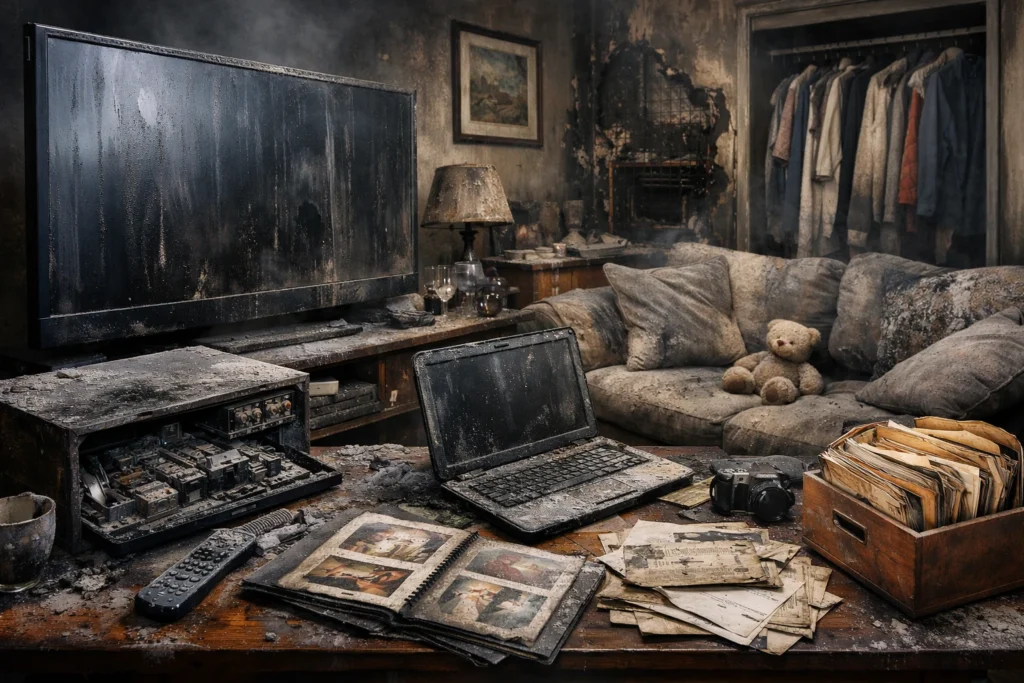
One of the most misunderstood aspects of Fire Damage vs Smoke Damage Insurance involves hidden losses. A burned wall is obvious. Smoke residue inside a high-end entertainment system is not. A fire may damage one section of a home. Smoke can affect thousands of square feet. Furniture, clothing, electronics, artwork, family photographs, and important documents can all suffer contamination. Those losses add up quickly.
Why Understanding Coverage Matters
Many homeowners only review their policy after a loss occurs. That creates unnecessary stress.
Insurance policies often contain several categories of coverage related to fire and smoke damage, including:
| Coverage Type | Purpose |
| Dwelling Coverage | Repairs to the structure |
| Personal Property Coverage | Replacement of belongings |
| Additional Living Expenses | Temporary housing costs |
| Other Structures Coverage | Detached garages and sheds |
| Debris Removal | Cleanup after the loss |
Understanding how each category applies can help homeowners identify missing items during the claim process.
Fire Claims Often Move Faster
In many situations, fire damage claims are easier to evaluate. The destruction is visible. The repair scope is often easier to measure. The insurance carrier can estimate rebuilding costs using established construction pricing models. Smoke damage is different.
Determining the extent of contamination may require specialized testing, environmental evaluations, and restoration assessments. As a result, smoke-related disputes are often more common.
By the way, homeowners researching complex restoration topics sometimes encounter technical scientific concepts such as Aeroelasticity. While unrelated to fire claims themselves, it illustrates how hidden forces can create significant effects beneath the surface much like smoke contamination inside a home.
Does Homeowners Insurance Cover Fire Damage?
The good news is that most homeowners insurance policies cover accidental fire losses. Coverage typically extends to both structural damage and personal property losses. However, coverage details vary by policy. Understanding what is commonly covered can help homeowners identify potential claim issues early.
Structural Damage Coverage
Dwelling coverage often applies to repairs involving:
- Roofing systems
- Framing
- Drywall
- Flooring
- Electrical systems
- Plumbing systems
- Windows
- Doors
If portions of the home must be rebuilt, dwelling coverage typically becomes the primary source of recovery.
Personal Property Coverage
Fire losses often extend beyond the structure itself.
Personal belongings may include:
- Furniture
- Electronics
- Clothing
- Appliances
- Jewelry
- Artwork
- Collectibles
Documenting these items thoroughly can significantly affect settlement outcomes. Many homeowners underestimate the value of their contents until they begin preparing an inventory.
Additional Living Expenses
If a home becomes uninhabitable, many policies provide additional living expense coverage.
This may include:
- Hotel accommodations
- Rental housing
- Restaurant meals
- Laundry expenses
- Pet boarding
These costs can accumulate rapidly after a significant fire. Maintaining receipts becomes essential.
Common Causes of Covered Fires
Many covered claims arise from:
- Electrical malfunctions
- Kitchen accidents
- Appliance failures
- Lightning strikes
- Heating equipment failures
- Fireplace incidents
Coverage generally applies regardless of how the fire started, provided no policy exclusions are triggered.
Situations That May Create Disputes
Even when a fire itself is covered, disagreements sometimes arise.
Common examples include:
- Scope of repairs
- Replacement versus repair decisions
- Code upgrade requirements
- Depreciation calculations
- Matching issues involving flooring or roofing
The larger the loss, the greater the potential for disagreements. That is why documentation becomes so important.
Does Homeowners Insurance Cover Smoke Damage?
Most homeowners assume smoke damage is automatically covered whenever a fire occurs. In many situations, they are correct. However, smoke-related claims often involve additional complexity. The challenge is not usually whether smoke damage exists. The challenge is determining how extensive it is.
What Smoke Damage Coverage Typically Includes
Policies often provide coverage for:
- Soot removal
- Surface cleaning
- Odor remediation
- HVAC cleaning
- Content restoration
- Temporary storage expenses
The scope of restoration can vary dramatically depending on the severity of contamination.
Smoke Can Damage More Than Surfaces
Many homeowners focus on visible residue. That is only part of the picture.
Smoke can penetrate:
- Upholstery
- Carpet padding
- Insulation
- Drywall
- Wood framing
- Air ducts
Once contamination reaches porous materials, cleaning becomes more difficult. In some cases, replacement may be necessary.
The Challenge of Odor Removal
Smoke odors create one of the most frequent areas of dispute. Insurance carriers may approve cleaning. Restoration contractors may recommend replacement. Homeowners often find themselves caught in the middle. The question becomes simple: Will cleaning permanently eliminate the odor? If not, replacement may be justified.
Electronics Present Unique Challenges
Smoke particles can infiltrate:
- Televisions
- Computers
- Gaming systems
- Home automation equipment
- Audio systems
Damage may not appear immediately. Corrosion can develop over time. This delayed effect makes documentation particularly important.
When Smoke Damage Exists Without Flames
Not all smoke claims involve direct fire damage to the insured structure.
Examples may include:
- Nearby structure fires
- Wildfire smoke intrusion
- Electrical incidents
- Furnace malfunctions
Coverage varies based on policy language and claim circumstances. Reviewing policy provisions carefully becomes essential.
Fire Damage vs Smoke Damage Insurance Claims: The Biggest Differences
Many homeowners expect fire and smoke claims to follow identical processes. In reality, they often do not. The differences can affect inspections, estimates, settlement timelines, and overall claim value.
Fire Damage Is Easier to See
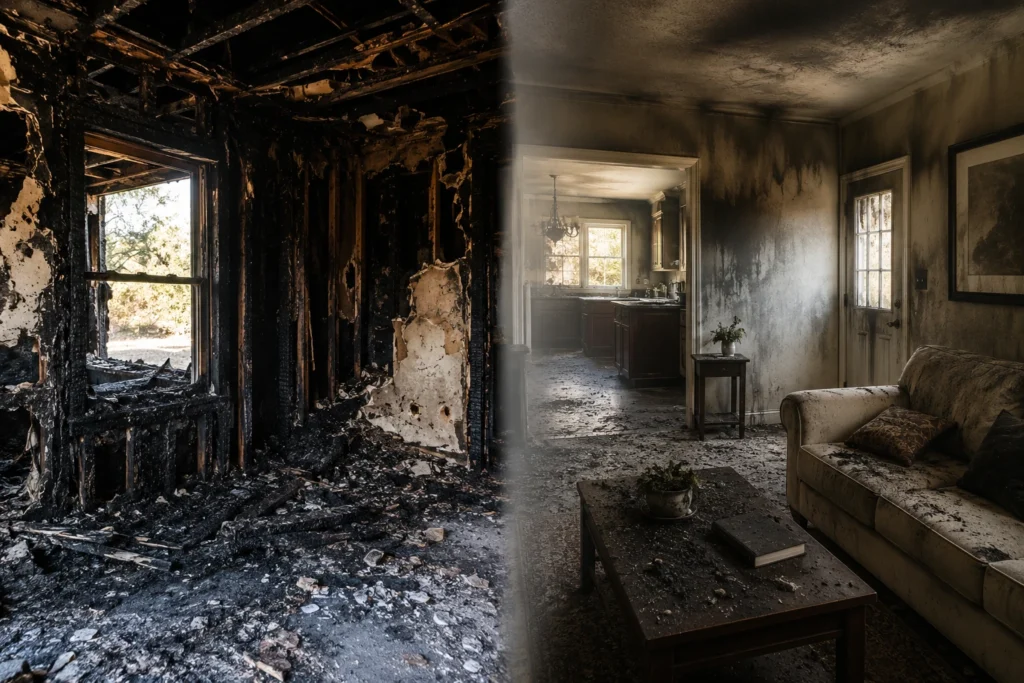
Fire damage is generally straightforward. Burned materials can be measured. Destroyed areas can be documented. Repair costs can be estimated with relative certainty. Smoke damage rarely offers that same clarity. The contamination often spreads far beyond the visibly affected area.
Smoke Damage Requires More Investigation
A proper smoke damage claim may involve:
- Environmental assessments
- Air quality evaluations
- HVAC inspections
- Content restoration reviews
- Odor testing
Each component adds complexity. Each component may influence the final settlement.
Documentation Requirements Differ
Fire claims focus heavily on structural repairs. Smoke claims frequently require proof of contamination. That often means more photographs, more reports, and more specialized evaluations.
Settlement Disputes Tend to Be Different
Fire disputes often involve rebuilding costs. Smoke disputes often involve contamination severity. One focuses on construction. The other focuses on restoration. Those distinctions matter.
A great deal.
Fire Damage vs Smoke Damage Insurance Comparison
| Factor | Fire Damage | Smoke Damage |
| Visibility | Highly Visible | Often Hidden |
| Structural Impact | Severe | Moderate to Severe |
| Documentation Difficulty | Moderate | High |
| Testing Requirements | Limited | Often Extensive |
| Odor Concerns | Minimal | Significant |
| Contents Impact | Moderate | Often Extensive |
| Dispute Frequency | Moderate | High |
| Claim Complexity | Moderate | High |
The comparison highlights why Fire Damage vs Smoke Damage Insurance claims can produce very different outcomes, even when they originate from the same event.
Why Smoke Damage Claims Are Frequently Underestimated
One of the most expensive mistakes homeowners make after a fire is assuming smoke damage is minor compared to structural damage. That assumption can cost thousands of dollars. In reality, smoke damage often extends far beyond what is visible during an initial inspection.
Soot Travels Everywhere
Smoke does not stay in one room. It moves throughout the structure. Even a relatively small fire can spread soot particles into areas that appear completely unaffected.
Commonly impacted areas include:
- Attics
- Air ducts
- Closets
- Storage rooms
- Cabinets
- Behind appliances
Without thorough inspections, these areas can be overlooked.
Personal Property Losses Escalate Quickly
Many homeowners focus on structural repairs while underestimating content losses.
Consider the number of items inside a typical home:
- Clothing
- Bedding
- Furniture
- Electronics
- Kitchenware
- Family heirlooms
- Office equipment
Each item must be evaluated individually. When hundreds or even thousands of possessions are affected, claim values can increase substantially.
Smoke Odors Can Persist for Years
Smoke odors are more than an inconvenience. They often indicate contamination remains. If odor-producing particles continue to exist inside porous materials, the smell can return repeatedly despite cleaning efforts.
This is especially common in:
- Carpeting
- Upholstery
- Insulation
- Drywall
- Wood framing
Professional remediation may be required to fully address the problem.
Hidden Damage to Electronics
Electronics deserve special attention. Smoke residue can create corrosion inside sensitive components. The device may function immediately after the fire. Months later, performance problems may begin.
Homeowners should carefully document:
- Computers
- Televisions
- Security systems
- Smart home equipment
- Gaming systems
- Audio equipment
These losses are frequently underestimated during initial inspections.
How Insurance Companies Evaluate Fire Damage Claims
Insurance companies rely on documentation, inspections, and repair estimates to determine claim value. Understanding this process helps homeowners prepare more effectively.
Initial Inspection
The first inspection generally focuses on:
- Cause of loss
- Extent of damage
- Safety concerns
- Structural integrity
- Emergency mitigation efforts
The adjuster will typically photograph affected areas and prepare an initial scope of damage.
Repair Versus Replacement Decisions
Not everything that is damaged must be replaced. At least from the insurer’s perspective. The challenge often involves determining whether repairs will restore the property to its pre-loss condition.
Questions frequently arise regarding:
- Roofing materials
- Flooring
- Cabinets
- Trim work
- Windows
- Specialty finishes
These decisions can significantly impact settlement values.
Estimating Structural Repairs
Estimating repairs involves far more than replacing visible materials.
Professionals may evaluate:
- Framing
- Electrical wiring
- Plumbing systems
- Ventilation systems
- Insulation
- Roofing assemblies
A comprehensive scope often reveals damage that was not obvious immediately after the loss.
Code Upgrade Considerations
Many older homes require upgrades during reconstruction. Building codes evolve over time. If portions of a structure are rebuilt, current code requirements may apply. These upgrades can substantially increase project costs. Understanding policy provisions related to ordinance and law coverage becomes important.
How Insurance Companies Evaluate Smoke Damage Claims
Smoke damage claims often require a different approach. The focus shifts from rebuilding to contamination assessment.
Surface Cleaning Evaluations
The insurer may first determine whether affected materials can be cleaned.
This often involves evaluating:
- Walls
- Ceilings
- Flooring
- Cabinetry
- Fixtures
If cleaning is expected to restore the item, replacement may initially be denied.
Air Quality and Contamination Testing
In larger losses, specialists may perform environmental assessments.
These evaluations can help determine:
- Contamination levels
- Airborne particle concerns
- Odor sources
- Restoration requirements
The findings frequently influence claim negotiations.
HVAC System Assessments
HVAC systems deserve careful review. Smoke can travel throughout ductwork and mechanical equipment.
Potential concerns include:
- Contaminated ducts
- Damaged air handlers
- Residue inside vents
- Persistent odor circulation
Incomplete HVAC remediation can create long-term problems.
Contents Restoration Analysis
Insurance companies often evaluate whether contents can be:
- Cleaned
- Restored
- Repaired
- Replaced
These decisions may vary significantly depending on the item. Two contractors may reach very different conclusions regarding the same piece of furniture. That is one reason smoke claims sometimes generate disagreement.
Common Claim Disputes in Fire and Smoke Damage Losses
Even when coverage exists, disputes can arise. Understanding common areas of disagreement helps homeowners identify potential issues early.
Cleaning Versus Replacement
This may be the most common smoke-related dispute. The insurer may recommend cleaning. The homeowner or restoration contractor may recommend replacement. The question becomes whether cleaning can truly return the item to its pre-loss condition.
Hidden Damage Not Included in Estimates
Initial inspections often focus on visible damage. Additional issues may emerge later.
Examples include:
- Hidden soot contamination
- Damaged insulation
- HVAC contamination
- Structural concerns behind walls
Supplemental claims frequently address these discoveries.
Additional Living Expense Disputes
Temporary housing costs can become significant.
Questions sometimes arise regarding:
- Length of displacement
- Rental expenses
- Meal costs
- Travel expenses
Maintaining organized records can help support reimbursement requests.
Delays in Claim Processing
Large fire losses often involve multiple inspections. Contractors, engineers, restoration companies, and adjusters may all participate. As complexity increases, timelines often extend. Patience helps. Documentation helps even more.
Documentation Tips That Strengthen Fire and Smoke Damage Claims
Strong documentation can dramatically improve claim outcomes. The goal is simple. Create a clear record of the damage.
Photograph Everything
Take photographs immediately. Then continue taking photographs throughout the process.
Focus on:
- Structural damage
- Smoke residue
- Damaged contents
- Temporary repairs
- Cleanup efforts
The more visual evidence available, the easier it becomes to demonstrate the full extent of the loss.
Build a Detailed Inventory
Many homeowners underestimate their contents.
An inventory should include:
- Item descriptions
- Approximate purchase dates
- Estimated values
- Photographs
- Receipts when available
A thorough inventory often uncovers losses that might otherwise be forgotten.
Save Damaged Items
Do not discard items too quickly.
Whenever possible:
- Preserve evidence
- Photograph items before disposal
- Consult the insurer first
Damaged property can become important evidence later.
Keep Every Receipt
Claim-related expenses add up.
Save receipts for:
- Hotels
- Meals
- Temporary housing
- Storage units
- Emergency repairs
Small expenses accumulate quickly after a major fire.
Obtain Independent Assessments
Independent evaluations may identify issues missed during initial inspections. This can be particularly valuable when smoke contamination appears widespread.
The Role of a Public Adjuster in Fire and Smoke Damage Claims
Large losses often involve multiple moving parts. That complexity leads some homeowners to seek professional representation.
What a Public Adjuster Does
A public adjuster works on behalf of the policyholder.
Responsibilities may include:
- Reviewing policy provisions
- Documenting losses
- Evaluating damages
- Preparing claim presentations
- Negotiating settlements
Their role differs from professionals hired by the insurance carrier.
Identifying Overlooked Damage
One area where public adjusters frequently assist involves identifying missing claim components.
This may include:
- Additional smoke contamination
- Hidden structural damage
- Contents losses
- Additional living expense issues
Comprehensive documentation often becomes the foundation for supplemental claim discussions.
Managing Complex Claims
Fire losses generate enormous amounts of information. Reports. Photographs. Estimates. Correspondence. Invoices. Keeping everything organized can be challenging. Professional assistance may help streamline that process. Some homeowners researching claim strategies online eventually come across phrases such as Fire Insurance Adjuster Secrets.
Fire Insurance Adjuster Secrets while searching for ways to better understand insurer evaluations and settlement negotiations. The most effective strategy, however, remains thorough documentation and a clear understanding of policy coverage.
Special Considerations for Homeowners in Prosper
Homeowners in Prosper often face unique claim considerations.
Many residential properties contain:
- Custom finishes
- High-value furnishings
- Advanced home technology
- Large square footage
These features can increase claim complexity.
Larger Homes Create Larger Documentation Needs
A larger home typically contains:
- More contents
- More rooms
- More systems
- More restoration requirements
Consequently, documentation becomes increasingly important.
Smoke Can Affect Entire Properties
Because many homes feature open floor plans, smoke may spread rapidly throughout the structure. Even areas distant from the fire source may require inspection.
Why Second Opinions Matter
Not all inspections reach identical conclusions. When significant losses occur, obtaining additional professional opinions may help clarify:
- Scope of contamination
- Repair requirements
- Restoration feasibility
- Replacement needs
For some homeowners in Prosper, that additional review provides valuable insight during the claims process.
Steps to Take Immediately After Fire or Smoke Damage
The actions taken during the first few days after a loss often influence the entire claim.
Prioritize Safety
Never enter unsafe areas. Structural damage, electrical hazards, and air quality concerns can create dangerous conditions.
Notify Your Insurance Carrier
Prompt reporting helps preserve important timelines. It also initiates the claims process.
Prevent Additional Damage
Temporary mitigation efforts may include:
- Roof tarping
- Water removal
- Board-up services
Taking reasonable steps to protect the property is generally expected.
Begin Documentation Immediately
Do not wait. Conditions change. Evidence disappears. The sooner documentation begins, the stronger the record becomes.
Schedule Professional Inspections
Professional evaluations frequently uncover damage that homeowners cannot readily identify. This is particularly true with smoke contamination.
Review Estimates Carefully
Never focus solely on the final dollar amount. Review the scope of work. Missing items often create larger problems than pricing differences.
Final Thoughts
Understanding Fire Damage vs Smoke Damage Insurance is critical for homeowners navigating a property loss. Although both types of damage may originate from the same event, they often create very different claim challenges. Fire damage is typically visible and easier to evaluate. Smoke damage, on the other hand, can spread throughout an entire property, affecting structural materials, personal belongings, HVAC systems, and indoor air quality.
The most successful claims are usually supported by thorough documentation, organized records, detailed inventories, and professional evaluations. Homeowners who understand the differences between fire and smoke losses are better prepared to identify overlooked damage, challenge incomplete estimates, and pursue fair settlements. When major losses occur, taking a proactive approach can make a significant difference. Whether the damage involves burned structural components, widespread soot contamination, or both, a clear understanding of Fire Damage vs Smoke Damage Insurance can help homeowners protect their property, their finances, and their long-term recovery.
FAQs
Fire damage insurance addresses destruction caused directly by flames and heat, while smoke damage insurance covers contamination from soot, smoke residue, and lingering odors.
Most homeowners insurance policies cover smoke damage when it results from a covered event, but coverage details and limitations vary by policy.
In some cases, yes. Smoke can spread throughout an entire home, affecting areas that were never touched by flames and increasing restoration costs.
It depends on whether the furniture can be restored to its pre-loss condition. If cleaning is ineffective, replacement may be considered.
Many policies cover odor removal as part of smoke damage remediation when the smoke originates from a covered loss.
Insurers often rely on inspections, restoration reports, contamination assessments, and documentation showing the extent of soot and odor penetration.
Yes. Smoke particles can enter electronic devices and cause corrosion or performance issues that may not become apparent immediately.
Prioritize safety, notify your insurance company, document all damage with photographs, and schedule professional inspections as soon as possible.
Disputes frequently arise over whether items should be cleaned or replaced and whether hidden contamination has been fully identified.
A public adjuster may be helpful when losses are substantial, claim issues become complicated, or homeowners believe damages have been overlooked.