
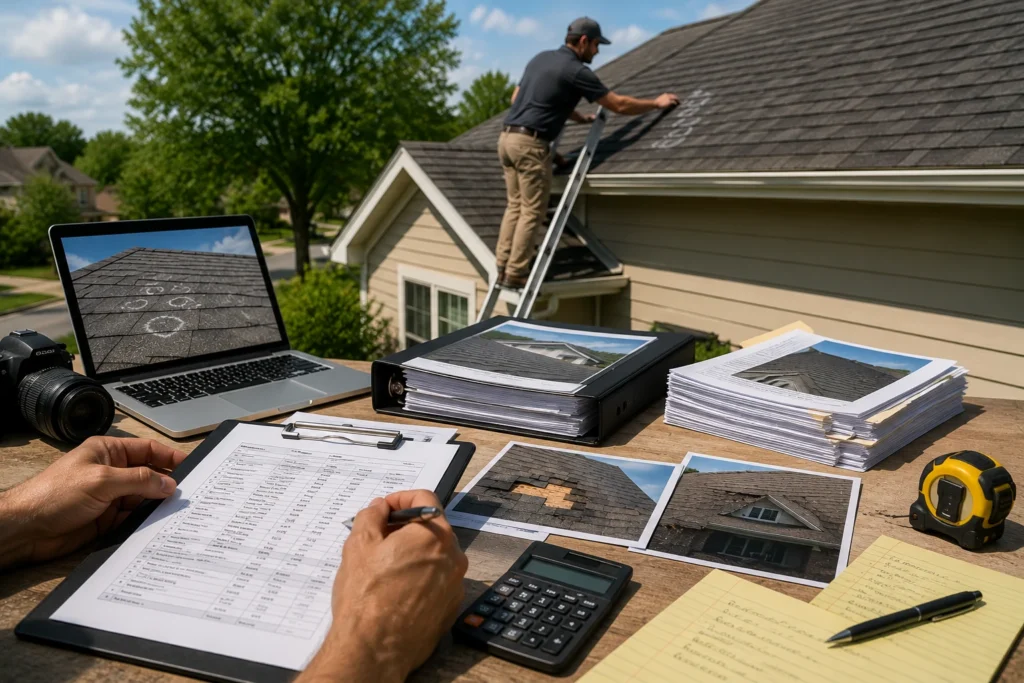
Roof damage is stressful enough. The last thing most homeowners expect is a battle over whether their insurance company should replace an entire roof or only a portion of it. Yet that exact issue sits at the center of many disputes involving matching laws for roof replacement in Prosper, TX. After a hailstorm or wind event, homeowners often discover that getting a roof restored to its original appearance is not as simple as filing a claim and waiting for a check. Insurance carriers, contractors, public adjusters, and property owners frequently disagree about what constitutes a proper repair. Interestingly, these disputes often involve concepts that are surprisingly technical, much like the scientific study of Topological Space, where seemingly small differences can have significant implications. In roofing claims, a slight difference in color, texture, or material can completely change the appearance of a home.
For many homeowners, the expectation is straightforward. If a storm damages the roof, the roof should look the same after repairs are completed. That sounds reasonable. However, insurance policies do not always approach the issue from that perspective. Instead, insurers often focus on whether the damaged portion can be repaired with materials that perform similarly to the originals. This is where conflicts begin. A roof may function properly after repairs yet still look noticeably different from the undamaged sections.
When homeowners start researching claim options, one common question appears repeatedly: Should I Use a Public Adjuster? The answer depends on the complexity of the claim, but matching disputes are often among the situations where professional representation can provide significant value because documentation and policy interpretation become critical. If you own a home in Prosper and have received an insurance estimate that only includes partial roof repairs, understanding your rights and options can make a major difference in the outcome of your claim. Let’s break down exactly how matching disputes work, what Texas law says, and what steps homeowners can take to protect their investment.
What Are Matching Laws in Roof Insurance Claims?
The term “matching law” refers to rules or regulations that address how damaged property should be repaired when replacement materials do not match the existing materials.
On a roof, matching issues commonly involve:
- Shingle color differences
- Texture variations
- Manufacturer discontinuations
- Aging and weathering
- Product line changes
- Material availability problems
Imagine replacing one section of a ten-year-old roof with brand-new shingles. Even if the replacement shingles come from the same manufacturer, they may look dramatically different because the original shingles have faded over time. The result? A patchwork appearance that can stand out from the street. For many homeowners, that outcome feels incomplete. After all, insurance is supposed to restore property after a covered loss. However, insurers may view the situation differently.
Why Insurance Companies Often Favor Partial Repairs
Insurance companies generally evaluate whether damaged components can be repaired rather than replaced entirely. Their reasoning is straightforward: If only one slope of the roof sustained storm damage, why replace the entire roofing system? From a cost perspective, partial repairs are often significantly less expensive than full replacement. Consequently, insurers frequently begin with the most limited repair scope they believe satisfies the policy requirements. This does not automatically mean the carrier is acting improperly. However, it does mean homeowners should carefully review the estimate before accepting the settlement.
What Homeowners Usually Expect
Most property owners focus on restoration. They want the home returned to the condition it was in before the storm occurred.
That expectation often includes:
| Homeowner Concern | Why It Matters |
| Uniform appearance | Protects curb appeal |
| Consistent materials | Avoids visible patchwork |
| Property value | Supports future resale |
| HOA compliance | Helps maintain neighborhood standards |
| Long-term durability | Prevents future maintenance concerns |
These expectations frequently collide with insurer repair proposals, creating the disputes that surround matching issues.
Does Texas Have a Roof Matching Law?
One of the biggest misconceptions surrounding roof claims involves the belief that Texas has a statewide law requiring insurance companies to replace an entire roof whenever matching materials cannot be found. That is not exactly how things work. Texas does not have a specific matching statute comparable to laws found in certain other states. That fact surprises many homeowners.
They often hear stories online about entire roofs being replaced because materials could not be matched and assume the same rules apply everywhere. Unfortunately, insurance claims are rarely that simple.
Why Policy Language Matters More Than Many Homeowners Realize
In Texas, claim outcomes are often driven by the wording inside the insurance policy itself.
Several provisions may influence matching disputes, including:
- Replacement cost coverage
- Like kind and quality language
- Repair obligations
- Exclusions and limitations
- Endorsements specific to roofing systems
Every policy is different. That distinction matters. Two homeowners living next door to each other could experience similar roof damage yet receive very different claim outcomes depending on their policy language.
Understanding Like Kind and Quality
Insurance carriers frequently rely on “like kind and quality” language when evaluating repairs. In simple terms, this means replacement materials should be reasonably similar to the originals. The debate begins when determining what “similar” actually means.
Does similar mean:
- Identical appearance?
- Similar functionality?
- Comparable durability?
- Equivalent market value?
Reasonable people can disagree. That is why matching disputes often become negotiation issues rather than straightforward claim approvals.
Why Matching Issues Are Common in Prosper, TX
North Texas storms create the perfect environment for roof matching disputes. Large hail. Strong winds. Intense sun exposure. Rapid community growth. Those factors combine to create unique challenges for homeowners. In fact, many discussions involving matching laws for roof replacement in Prosper, TX stem from weather events that damage only portions of a roof.
Hail Damage Is Often Uneven
Storms rarely strike every part of a roof equally. One slope may sustain substantial hail impacts while another slope experiences minimal damage. This creates a difficult situation.
The insurer may argue only the damaged slope requires replacement. The homeowner may argue that replacing only one slope creates a visible mismatch. Both sides often present evidence supporting their position.
Aging Roof Systems Create Additional Problems
Even if matching shingles technically exist, age can create significant differences.
Over time, roofing materials experience:
- UV exposure
- Oxidation
- Weathering
- Color fading
- Surface wear
As a result, brand-new replacement shingles may stand out dramatically against older roofing materials. The longer the roof has been installed, the greater this challenge becomes.
Homeowner Association Considerations
Many neighborhoods maintain appearance standards through HOA guidelines.
A visibly patched roof can raise concerns about:
- Community appearance
- Property values
- Architectural consistency
While HOA requirements do not automatically create insurance coverage, they may become relevant when evaluating whether repairs adequately restore the property. For homeowners in Prosper, this issue can carry added significance because many neighborhoods place a strong emphasis on maintaining a consistent appearance throughout the community.
What Happens When Matching Shingles Are No Longer Available?
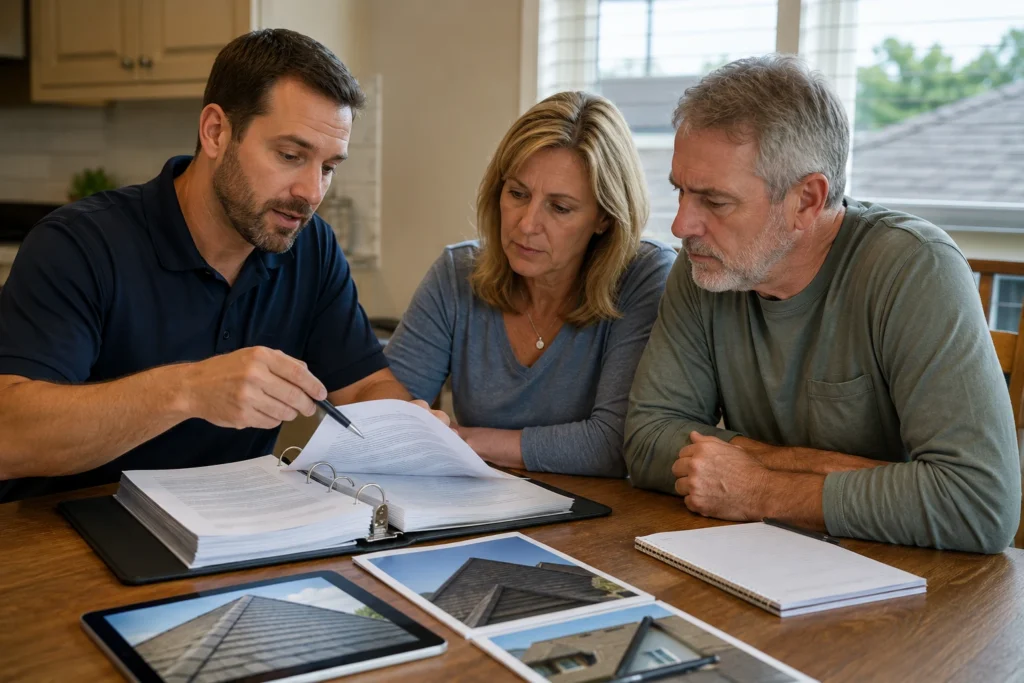
This is where many disputes become particularly challenging. Manufacturers routinely discontinue roofing products. Colors change. Product lines evolve. Materials become obsolete. A roof installed ten or fifteen years ago may contain shingles that simply cannot be purchased today.
The Discontinued Shingle Problem
When matching materials disappear from the market, insurers often face difficult decisions.
Possible outcomes include:
| Scenario | Potential Result |
| Exact match available | Partial repair may be proposed |
| Similar product available | Carrier may approve substitute materials |
| Product discontinued | Matching dispute becomes more likely |
| Significant visual difference | Negotiation often increases |
Documentation becomes essential in these situations. The homeowner’s position becomes much stronger when evidence demonstrates that matching products are unavailable.
Evidence That May Support Full Replacement
Strong documentation often includes:
- Manufacturer letters
- Supplier correspondence
- Product discontinuation notices
- Contractor reports
- Material availability searches
- Photographic comparisons
The goal is not simply proving materials are unavailable. The goal is demonstrating that repairs cannot reasonably restore the roof to a consistent condition.
Why Visual Differences Matter
Insurance companies sometimes focus heavily on functionality. Homeowners often focus on appearance. Both perspectives matter.
A roof serves multiple purposes:
- Weather protection
- Structural performance
- Architectural appearance
- Property value support
Ignoring one of those elements can create disputes that continue long after repairs are completed.
Understanding How Matching Disputes Are Evaluated
There is no universal formula. Each claim involves a combination of facts, documentation, policy language, and expert opinions.
Several questions commonly arise:
- Can matching materials still be obtained?
- Are substitute materials visually similar?
- Is the difference noticeable from ground level?
- Does the mismatch affect marketability?
- Does the policy address matching concerns?
The answers can dramatically influence claim outcomes.
Factors That Strengthen a Matching Argument
Certain circumstances tend to increase the likelihood of a successful matching-related claim position.
These include:
- Discontinued roofing materials
- Significant color differences
- Premium roofing products
- Large visible roof sections
- HOA restrictions
- Expert documentation
The stronger the evidence, the stronger the argument. That principle applies to virtually every property insurance dispute.
Why Partial Roof Replacement Can Affect Property Value
Homeowners often focus on aesthetics. That concern is understandable. However, matching issues may extend beyond appearance alone. Real estate professionals frequently note that buyers form opinions quickly. Sometimes within seconds. A visibly patched roof can create questions even if the roof remains structurally sound.
Potential buyers may wonder:
- Was the repair completed properly?
- Was additional damage overlooked?
- Will future repairs be necessary?
- Why does the roof appear uneven?
Those questions can influence perceptions of value.
Documentation That Strengthens a Matching Claim
When it comes to disputes involving matching laws for roof replacement in Prosper, TX, documentation often determines whether a homeowner gains leverage or loses it. Good intentions are not evidence. Frustration is not evidence. A contractor saying, “Those shingles don’t match,” may be helpful, but insurance carriers typically require far more support before expanding a repair scope.
Start With a Professional Roof Inspection
A thorough roof inspection should document:
- Hail impacts
- Wind damage
- Creased shingles
- Granule loss
- Material condition
- Roof age
- Repair feasibility
The inspection should also evaluate whether replacement materials can reasonably match the existing roof. Many successful matching disputes begin with detailed reports that explain exactly why repairs may not restore the property to its pre-loss condition.
Photographs Matter More Than Most Homeowners Realize
Take photographs early. Take them often. Take them from multiple angles.
Helpful images include:
- Ground-level views
- Street-facing roof slopes
- Close-up material comparisons
- Overall roof elevations
- Areas showing visible color variation
The goal is simple. Create visual proof that helps demonstrate the impact of mismatched repairs.
Research Material Availability
One of the strongest forms of evidence involves proving that matching materials are no longer available.
Potential sources include:
- Roofing suppliers
- Manufacturers
- Product databases
- Distributor networks
A written statement confirming a product has been discontinued can become extremely valuable during negotiations.
Obtain Expert Opinions
Independent professionals can provide objective support.
Examples include:
- Roofing contractors
- Building consultants
- Engineers
- Public adjusters
Well-supported expert opinions often carry significant weight because they focus on facts rather than emotions.
How Public Adjusters Help With Roof Matching Disputes
Insurance policies are contracts. Unfortunately, most homeowners do not spend their weekends reading insurance contracts. That is perfectly understandable. However, matching disputes frequently involve policy interpretation, and that is where public adjusters can provide meaningful assistance.
Reviewing the Policy
The first step is understanding what coverage actually exists.
A public adjuster typically reviews:
- Coverage provisions
- Replacement cost language
- Roofing endorsements
- Exclusions
- Settlement conditions
Many homeowners discover important details hidden deep within policy language.
Building a Strong Evidence Package
Insurance claims are often won or lost based on documentation.
Public adjusters commonly assist with:
- Inspection coordination
- Damage documentation
- Material research
- Scope comparisons
- Estimate reviews
The objective is to present a clear and organized claim file that supports the homeowner’s position.
Negotiating With the Insurance Company
Negotiation is a major component of many roof claims. This is especially true when matching issues arise.
A public adjuster may help by:
- Responding to insurer objections
- Presenting supporting evidence
- Requesting reconsideration
- Pursuing supplemental payments
- Participating in claim discussions
Not every dispute requires aggressive escalation. Sometimes the right documentation alone changes the conversation. For many homeowners in Prosper, obtaining professional representation can provide clarity during a process that often feels overwhelming.
Common Insurance Company Arguments Against Full Roof Replacement
Understanding the carrier’s position is important. The strongest claims are often built by anticipating objections before they occur.
Argument #1: Only Damaged Areas Need Repair
This is perhaps the most common position.
The insurer may conclude that:
- Damage is limited
- Repairs are possible
- Undamaged sections remain functional
From their perspective, replacing unaffected portions of the roof may not be necessary. The homeowner’s response typically focuses on restoration and matching concerns.
Argument #2: Similar Materials Are Available
Insurance carriers may identify products that are close in appearance. The key question becomes whether “close” is sufficient.
Issues often arise involving:
- Color differences
- Texture variations
- Dimensional inconsistencies
- Manufacturer differences
A substitute product may perform adequately while still creating a visibly different appearance.
Argument #3: The Difference Is Cosmetic
Some insurers argue that mismatches are primarily aesthetic concerns. Homeowners often disagree.
After all, appearance contributes to:
- Property value
- Neighborhood consistency
- Buyer perception
- Overall restoration
Whether a mismatch is merely cosmetic or materially significant often becomes a central point of dispute.
Argument #4: The Roof Is Old
Age frequently enters the conversation. Insurers may contend that:
- Existing fading occurred naturally
- Wear developed over time
- New materials will always look different
While age is certainly relevant, it does not automatically resolve the matching question. Each claim must be evaluated on its own facts.
Steps Homeowners Should Take After Receiving a Partial Roof Estimate
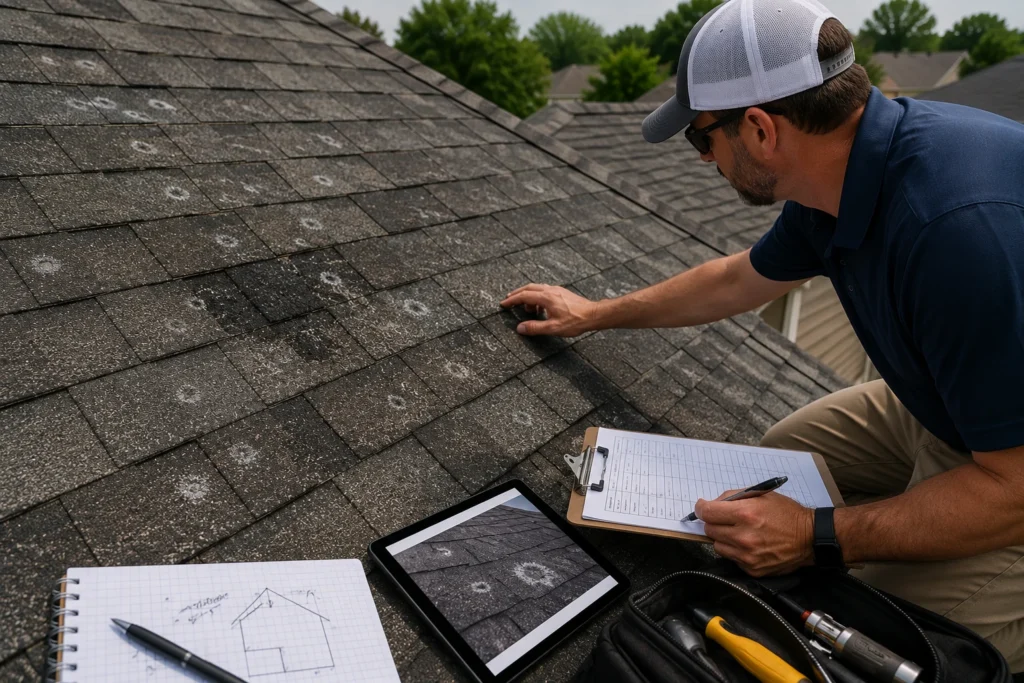
Receiving a partial roof estimate does not necessarily mean the claim process is finished. In many cases, it is only the beginning.
Step 1: Read Every Line of the Estimate
Most homeowners focus on one number. The settlement amount. That can be a mistake. The scope of work is often more important.
Review the estimate carefully and look for:
- Missing roof sections
- Incomplete repairs
- Omitted accessories
- Limited replacement areas
- Unaddressed matching concerns
Small omissions can have large consequences.
Step 2: Obtain an Independent Inspection
A second opinion can provide valuable insight. An experienced roofing contractor may identify:
- Additional storm damage
- Incomplete repair scopes
- Material availability issues
- Matching concerns
Comparing multiple professional opinions often reveals important differences.
Step 3: Gather Additional Documentation
Strong claims are supported by strong evidence.
Helpful materials include:
- Inspection reports
- Contractor estimates
- Manufacturer letters
- Supplier confirmations
- Photographs
Organization matters. The easier it is for decision-makers to understand the issue, the stronger the claim presentation becomes.
Step 4: Request Reconsideration if Necessary
Many homeowners assume the initial decision is final. It often is not.
Additional documentation may justify:
- Supplemental claims
- Reinspections
- Scope revisions
- Additional payments
Persistence backed by evidence frequently produces better outcomes than frustration alone.
Step 5: Explore Appraisal When Appropriate
Many policies include appraisal provisions. Appraisal can provide an alternative path for resolving certain claim disputes.
The process typically involves:
| Appraisal Component | Purpose |
| Homeowner appraiser | Represents policyholder position |
| Carrier appraiser | Represents insurer position |
| Umpire | Helps resolve disagreements |
| Valuation review | Determines disputed amounts |
Appraisal is not appropriate for every situation, but it can become an important tool in certain roof replacement disputes.
Why Every Matching Claim Is Different
One of the biggest mistakes homeowners make is assuming another person’s claim outcome guarantees a similar result. It does not. Claim outcomes depend on numerous factors.
These may include:
- Policy language
- Roof age
- Material type
- Extent of damage
- Material availability
- Carrier position
- Supporting documentation
Even neighboring homes can experience dramatically different outcomes. That reality makes individualized claim evaluation essential.
The Importance of Looking Beyond General Advice
Internet forums are full of opinions. Some are useful. Some are not.
The most reliable guidance usually comes from evaluating:
- The actual policy
- The actual damage
- The actual materials
- The actual evidence
That approach creates a much stronger foundation than relying solely on generalized advice.
The Future of Roof Matching Disputes
Matching disputes are unlikely to disappear. In fact, they may become more common. Manufacturers continually introduce new products. Older materials become discontinued. Storm activity remains a constant challenge across North Texas. As roofing systems become more specialized, finding exact matches may become increasingly difficult. For homeowners, this means understanding claim rights and responsibilities will remain important long after the next storm passes. Those who prepare early often place themselves in a much stronger position when claim disputes arise.
Conclusion
Understanding matching laws for roof replacement in Prosper, TX requires looking beyond simple yes-or-no answers. Texas does not have a blanket statute that automatically requires full roof replacement whenever matching issues occur. Instead, outcomes often depend on policy language, material availability, documentation, and the specific facts of the claim.
That reality can be frustrating. It can also be navigated successfully. Homeowners who carefully review their insurance estimates, obtain independent inspections, document material availability, and gather strong supporting evidence frequently place themselves in a much better position during negotiations. The key is not assuming the initial estimate tells the whole story. Look deeper. Ask questions. Review the policy. Verify the facts.
Most importantly, understand that matching disputes are often resolved through evidence, not assumptions. For property owners facing roof damage in Prosper, a well-documented claim can make the difference between accepting a patchwork repair and securing a settlement that more accurately reflects the true scope of restoration needed. When discussions surrounding matching laws for roof replacement in Prosper, TX arise, preparation and documentation remain your most valuable tools.
FAQs
Texas does not have a specific statewide matching law for roofs. Coverage decisions are typically based on policy language, material availability, and the facts of the claim.
Matching laws for roof replacement in Prosper, TX generally refer to disputes involving whether insurance should cover additional roof replacement when matching materials are unavailable or significantly different.
Yes. If the insurer determines that only certain sections are damaged and repairable, it may approve a partial replacement rather than a full roof replacement.
Discontinued shingles can strengthen a matching argument because finding identical replacement materials may no longer be possible. Documentation from manufacturers or suppliers can be helpful.
A visibly mismatched roof may impact curb appeal and buyer perception. The extent of any effect depends on the severity of the mismatch and local market conditions.
Some HOAs have appearance standards that may discourage obvious roof mismatches. Review your community guidelines to understand any requirements.
This phrase generally means replacement materials should be reasonably comparable to the originals in function and quality, though not necessarily identical in appearance.
You can obtain documentation from roofing suppliers, manufacturers, contractors, or distributors showing that the original materials have been discontinued or cannot be sourced.
A second inspection can help identify overlooked damage, matching concerns, or scope issues that may not have been included in the initial estimate.
Yes. A public adjuster can review policy language, gather supporting documentation, and negotiate with the insurance company regarding matching-related issues.