
A leaking roof can turn from a minor annoyance into a major financial headache faster than most homeowners expect. Water rarely stays where it first appears. It travels through insulation, drywall, framing, and electrical systems, often causing damage far beyond the visible stain on the ceiling. That is why understanding Roof Leak Insurance Claims is so important. The actions you take during the first few hours and days after discovering a leak can significantly impact the outcome of your insurance claim. Many homeowners assume that if water enters through the roof, insurance automatically pays for everything. Unfortunately, it is not always that simple. Insurance carriers evaluate the cause of the leak, the condition of the roof, maintenance history, and the extent of resulting damage before determining coverage.
The difference between an approved claim and a denied claim often comes down to documentation. Strong evidence, detailed photographs, repair records, and prompt reporting can help establish that the damage resulted from a covered event rather than gradual deterioration. I have seen situations where a homeowner discovered a small ceiling stain and assumed it could wait a few weeks. By the time repairs began, hidden moisture had spread through multiple rooms, resulting in extensive structural repairs and mold remediation. Small leaks rarely stay small. Insurance policies are designed to cover sudden and accidental losses. However, they generally exclude damage caused by neglect, wear and tear, or long-term maintenance issues. Understanding this distinction before filing can help you avoid costly mistakes.
Interestingly, insurance investigations often involve highly technical assessments that resemble forms of forensic analysis. In some cases, experts examine moisture migration patterns, material failures, and structural conditions using methods similar to those studied in Rheology, the science of how materials deform and flow under stress. While homeowners do not need to become scientists, understanding how detailed these investigations can be helps explain why documentation matters. For homeowners facing roof leaks, preparation is everything. The better organized your claim, the stronger your position during negotiations with the insurance company.
Understanding Roof Leak Insurance Claims
What Is a Roof Leak Insurance Claim?
A roof leak insurance claim is a request submitted to your homeowners insurance carrier seeking compensation for covered damage resulting from water intrusion through the roof.
The claim may involve:
- Roof repairs
- Interior ceiling damage
- Damaged drywall
- Flooring replacement
- Personal property losses
- Mold remediation in certain situations
- Temporary living expenses if the home becomes uninhabitable
The key factor is determining what caused the leak. If a severe windstorm tears shingles from the roof and rain enters the home, coverage may apply. If the leak develops because the roof has deteriorated over many years without maintenance, coverage may be limited or denied altogether.
How Insurance Companies Evaluate Roof Leak Claims
Insurance carriers generally follow a structured investigation process. The adjuster’s primary objective is to answer one question:
“What caused the damage?”
To determine this, they may:
| Investigation Step | Purpose |
| Roof Inspection | Identify source of water intrusion |
| Interior Inspection | Assess resulting damage |
| Weather Review | Confirm storm activity |
| Documentation Review | Examine maintenance records |
| Contractor Reports | Evaluate repair recommendations |
| Photographic Evidence | Verify conditions and damages |
This process sounds straightforward. In reality, disagreements often arise because multiple factors may contribute to the leak. For example, a storm may damage an aging roof. The carrier may argue that the roof was already failing. The homeowner may argue that the storm created the opening that allowed water inside. These disputes are common.
Why Roof Leak Claims Are Frequently Disputed
Roof leak claims sit in one of the most heavily scrutinized categories of homeowners insurance.
Several factors contribute to disputes:
Maintenance Questions
Insurance companies routinely investigate whether proper maintenance occurred.
Questions often include:
- Was the roof inspected regularly?
- Were missing shingles repaired?
- Were previous leaks addressed promptly?
- Were gutters maintained?
Pre-Existing Conditions
Adjusters often look for evidence that damage existed before the reported event.
Indicators may include:
- Old water stains
- Rotting decking
- Multiple repair patches
- Long-term mold growth
Insufficient Documentation
Many claims become difficult simply because homeowners fail to document the damage adequately. Photos taken immediately after discovery can become extremely valuable evidence later.
Common Causes of Roof Leaks That May Be Covered
Storm Damage
Storms remain one of the leading causes of roof leak insurance claims.
Strong winds can:
- Remove shingles
- Lift flashing
- Damage ridge caps
- Create hidden openings
Rain then enters through these compromised areas. Hail can also fracture roofing materials, allowing water infiltration over time. In fact, many homeowners discover leaks weeks or even months after a major storm.
Fallen Trees and Debris
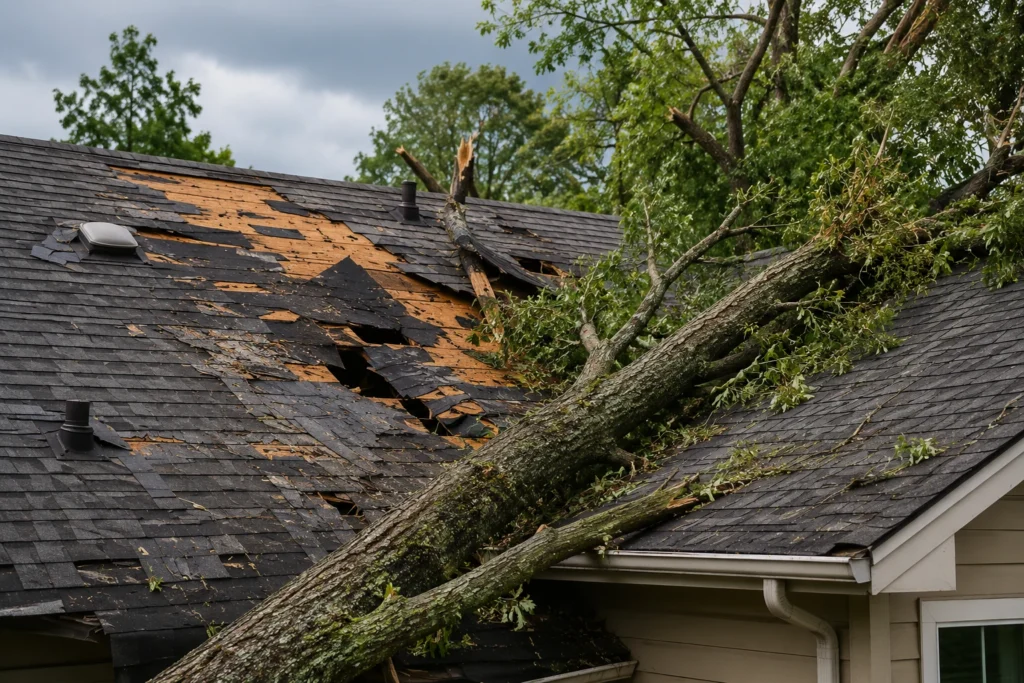
Tree impacts can cause sudden structural damage that often qualifies for coverage.
Common examples include:
- Fallen limbs puncturing roofing materials
- Entire trees collapsing onto structures
- Flying debris striking roof surfaces
In these situations, homeowners should immediately document the damage before emergency repairs begin.
Sudden Accidental Events
Some covered losses have nothing to do with storms.
Examples may include:
- Unexpected structural failures
- Accidental roof penetrations
- Damage caused by external impacts
These situations generally fit the definition of sudden and accidental loss that many policies cover.
Wind-Driven Rain Intrusion
Wind-driven rain creates unique claim challenges. Sometimes water enters through openings created by high winds that are difficult to identify later. Even when obvious roof damage is not immediately visible, professional inspections may reveal compromised flashing, vents, or sealants.
Roof Leak Situations Commonly Denied by Insurance Companies
Understanding what insurance typically excludes is just as important as understanding what it covers.
Normal Wear and Tear
Every roof has a lifespan. As roofing materials age, they naturally deteriorate. Insurance policies generally do not function as maintenance contracts.
Examples include:
- Aging shingles
- Granule loss
- Material fatigue
- Weathering
These conditions usually fall under homeowner responsibility.
Neglected Maintenance Issues
Delayed maintenance often creates significant claim obstacles. Consider this scenario. A homeowner notices missing shingles but postpones repairs for several months. During a subsequent rainstorm, water enters through the exposed area and damages the interior. The insurer may argue that preventable maintenance issues contributed to the loss.
Construction Defects
Improper installation can create leaks years after construction.
Common defects include:
- Incorrect flashing installation
- Improper fastening patterns
- Poor ventilation design
- Inadequate underlayment installation
Many insurance policies exclude construction defects themselves, though resulting damage may sometimes be evaluated separately.
Long-Term Leaks
Long-term leakage presents one of the biggest challenges in Roof Leak Insurance Claims. Insurance companies frequently search for evidence indicating the leak existed for an extended period.
Potential indicators include:
- Multiple layers of staining
- Rotting framing members
- Extensive mold growth
- Deteriorated insulation
The longer a leak exists, the harder it may become to demonstrate that the damage resulted from a covered event.
Signs That Your Roof Leak Is More Severe Than It Appears
Many homeowners underestimate the extent of water damage. What appears to be a simple stain may indicate widespread hidden problems.
Water Stains on Ceilings and Walls
Visible staining often represents only a fraction of the actual damage. Water can travel along framing components before becoming visible inside the home. As a result, the source of the leak may be located far from where the stain appears.
Hidden Moisture Behind Walls
Modern moisture detection equipment frequently reveals water trapped behind drywall and insulation.
This hidden moisture can:
- Damage framing
- Reduce insulation effectiveness
- Encourage mold growth
- Compromise indoor air quality
Professional inspections often uncover far more damage than homeowners initially expect.
Mold Growth Risks
Mold can begin developing surprisingly quickly when moisture remains trapped. Insurance treatment of mold varies significantly by policy. Some policies provide limited mold coverage. Others impose strict caps or exclusions. Because of these variations, reviewing policy language carefully becomes essential.
Structural Damage
Persistent water intrusion can weaken structural components.
Affected materials may include:
- Roof decking
- Rafters
- Trusses
- Ceiling joists
- Wall framing
Structural damage often represents one of the largest components of roof leak claim settlements.
What to Do Immediately After Discovering a Roof Leak
The first 24 to 48 hours after discovering a leak are critical. Actions taken during this period can influence both the amount of damage and the strength of your claim.
Protect the Property from Further Damage
Most insurance policies require homeowners to take reasonable steps to prevent additional damage.
Immediate actions may include:
- Placing containers under active leaks
- Moving valuables away from affected areas
- Installing temporary tarps when safe
- Contacting emergency mitigation professionals
Failure to mitigate damages can create complications later in the claims process.
Document Everything
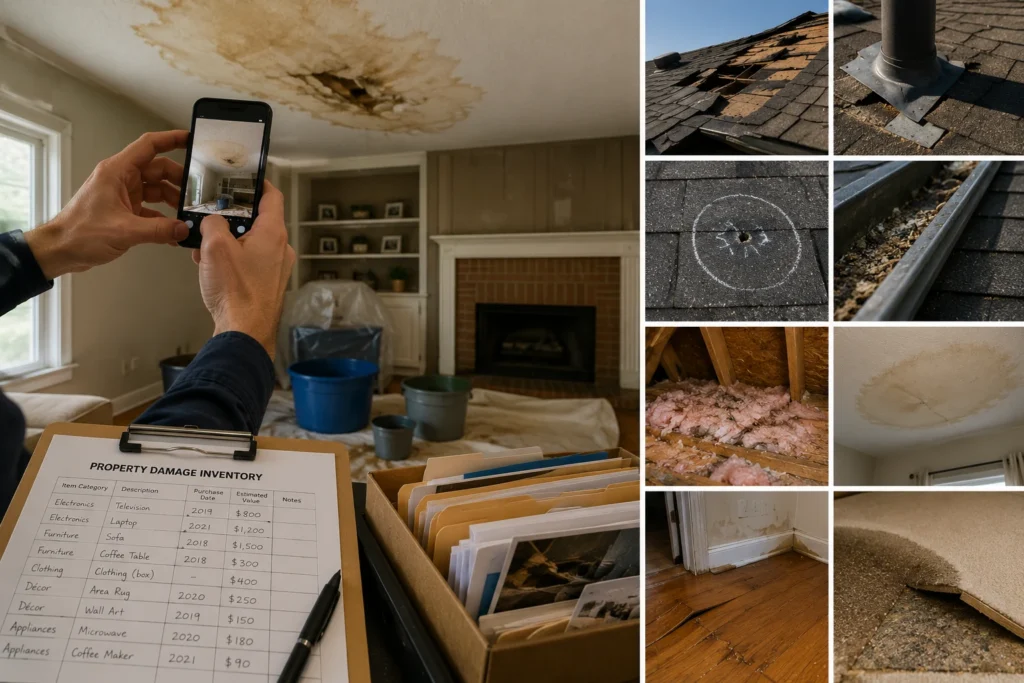
Before repairs begin, thoroughly document the conditions.
Capture:
- Roof damage
- Interior damage
- Water stains
- Damaged belongings
- Standing water
Take far more photographs than you think you need. Detailed visual evidence often becomes one of the strongest tools available during claim negotiations.
Save All Receipts
Keep records for every expense related to the loss.
This may include:
- Emergency tarping
- Water extraction
- Temporary repairs
- Hotel stays
- Equipment rentals
These expenses may become reimbursable under certain policy provisions.
Notify Your Insurance Company Promptly
Reporting delays can create avoidable challenges. Prompt notification helps preserve evidence and demonstrates that you acted responsibly after discovering the loss. For homeowners dealing with storm-related roof damage, especially those facing an Underpaid Hail Damage Insurance Claim, early reporting and thorough documentation can be critical factors in obtaining a fair settlement.
How to Document Roof Leak Insurance Claims Properly
Once the immediate emergency has been addressed, the next priority is building a claim file that clearly tells the story of the loss. Insurance companies rely heavily on documentation. The more organized and detailed your records are, the easier it becomes to demonstrate the full scope of damage.
Photograph the Source of the Leak
Many homeowners focus only on interior damage. That is a mistake. Document both the exterior and interior conditions.
Important photos include:
- Missing shingles
- Damaged flashing
- Roof punctures
- Hail impacts
- Water stains
- Wet insulation
- Damaged flooring
- Affected personal property
Take wide-angle photos and close-ups. Capture images from multiple angles whenever possible.
Create a Damage Inventory
Water damage often affects much more than the structure itself.
Prepare a detailed inventory that includes:
| Item Category | Examples |
| Electronics | TVs, computers, gaming systems |
| Furniture | Sofas, tables, beds |
| Clothing | Damaged garments and shoes |
| Décor | Artwork, rugs, wall hangings |
| Appliances | Small kitchen appliances |
Include estimated purchase dates, values, and replacement costs whenever possible.
Maintain a Claim File
Organization matters.
Create a dedicated folder containing:
- Insurance correspondence
- Inspection reports
- Repair estimates
- Contractor communications
- Receipts
- Photographs
- Claim notes
A well-maintained file can significantly reduce confusion during the claims process.
Obtain Professional Assessments
Professional inspections frequently reveal damage that homeowners cannot see.
Experts may identify:
- Hidden moisture
- Structural concerns
- Roof system failures
- Secondary water damage
Independent evaluations often provide valuable support when disagreements arise regarding the scope of repairs.
Understanding the Insurance Adjuster’s Role
Many homeowners mistakenly assume the insurance adjuster is there solely to advocate for them. The reality is more nuanced.
What Insurance Company Adjusters Do
Insurance adjusters investigate losses on behalf of the insurance carrier.
Their responsibilities typically include:
- Inspecting damage
- Reviewing policy provisions
- Determining coverage
- Preparing estimates
- Recommending settlement amounts
Most adjusters work professionally and honestly. However, their role is ultimately tied to evaluating claims for the insurer.
Limitations of Carrier Inspections
Adjusters often face demanding workloads. As a result, inspections may be relatively brief.
Potentially overlooked issues can include:
- Moisture trapped beneath roofing materials
- Damaged underlayment
- Hidden structural deterioration
- Secondary water migration
This does not mean damage is intentionally ignored. It simply means that some conditions are not immediately visible during a standard inspection.
Why Estimates Often Differ
It is common for contractor estimates and insurance estimates to vary.
Reasons may include:
- Different repair methods
- Material pricing differences
- Scope disagreements
- Missed damages
A roofing contractor may identify components that require replacement while the insurance estimate only includes repairs. These differences often become major negotiation points.
How a Public Adjuster Helps with Roof Leak Insurance Claims
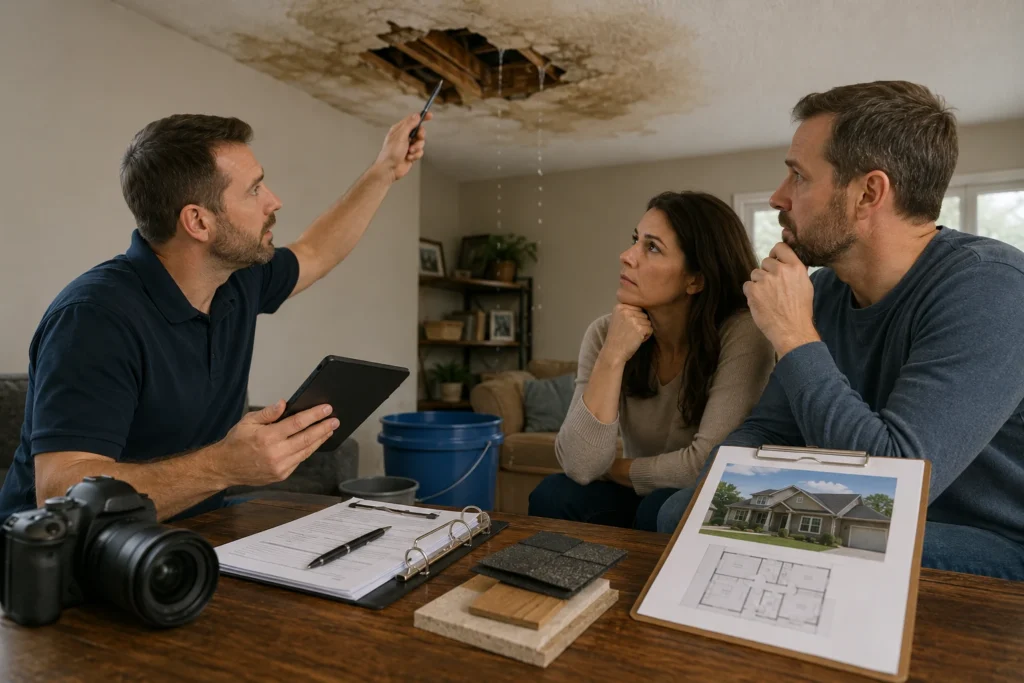
When substantial damage is involved, many homeowners seek professional claim representation. Public adjusters work exclusively for policyholders rather than insurance companies.
Independent Damage Evaluation
A public adjuster conducts a detailed review of the loss.
This often includes:
- Comprehensive inspections
- Damage documentation
- Policy analysis
- Scope development
The objective is to ensure that all covered damages are identified and properly presented.
Policy Interpretation
Insurance policies can be surprisingly complex. Coverage provisions, exclusions, endorsements, deductibles, and limitations all affect settlement outcomes.
Public adjusters help homeowners understand:
- Covered damages
- Additional benefits
- Applicable limitations
- Claim obligations
This knowledge can prevent costly misunderstandings.
Documentation and Negotiation
One of the most valuable services public adjusters provide is claim preparation.
Strong claims often include:
- Detailed damage reports
- Photographic evidence
- Repair estimates
- Expert opinions
- Supporting documentation
The more complete the claim package, the stronger the negotiating position.
Maximizing Settlement Accuracy
The goal is not to inflate claims. The goal is accuracy. A properly documented claim should reflect the full scope of covered damage so homeowners receive the benefits they are entitled to under their policy.
Roof Leak Insurance Claims in Prosper: Unique Challenges for Homeowners
Homeowners in Prosper face weather conditions that can significantly impact roofing systems. North Texas weather is unpredictable. One week may bring high winds and hail. The next may bring heavy rain and rapid temperature changes. These conditions place constant stress on roofing materials.
Weather Conditions That Affect Local Roofs
Several weather-related events frequently contribute to roof leaks:
- Hailstorms
- Windstorms
- Severe thunderstorms
- Wind-driven rain
- Extreme temperature fluctuations
Over time, repeated exposure can weaken roofing components and increase vulnerability to water intrusion.
Why Prosper Homeowners Should Act Quickly After Storms
After severe weather strikes Prosper, waiting can become expensive. Even minor storm damage can create small openings that allow water to enter the home during future rain events.
Prompt inspections can:
- Identify hidden damage
- Prevent secondary losses
- Preserve evidence
- Strengthen insurance claims
Many successful Roof Leak Insurance Claims begin with early detection.
Common Claim Issues Seen in Prosper
Homeowners in Prosper frequently encounter challenges such as:
- Partial claim approvals
- Underpaid settlements
- Coverage disputes
- Hidden damage disagreements
These issues often arise because roof systems are complex, and some damage remains concealed until repairs begin.
Common Mistakes Homeowners Make During Roof Leak Claims
Even valid claims can encounter problems when homeowners make avoidable errors.
Waiting Too Long to File
Delays create opportunities for insurers to question:
- The cause of damage
- The timeline of events
- The extent of losses
Prompt reporting helps eliminate uncertainty.
Throwing Away Damaged Materials
Many homeowners immediately discard damaged roofing components. That can be a mistake. Physical evidence may help support the claim and demonstrate the severity of the damage. Whenever possible, preserve damaged materials until inspections have been completed.
Accepting the First Settlement Without Review
Insurance estimates are not always final. Additional damage is frequently discovered during repairs. Review settlement offers carefully and compare them against professional estimates before making decisions.
Failing to Document Hidden Damage
Water travels. The visible stain on the ceiling may represent only a small portion of the actual loss. Comprehensive inspections often reveal hidden conditions that deserve further evaluation.
Steps to Take If Your Roof Leak Claim Is Denied
A denial is frustrating. It can also feel overwhelming. However, a denial does not necessarily mean the matter is over.
Review the Denial Letter Carefully
Start by understanding exactly why the claim was denied.
Common reasons include:
- Wear and tear findings
- Maintenance concerns
- Coverage exclusions
- Insufficient evidence
The denial letter often provides valuable insight into the carrier’s position.
Request Supporting Documentation
Ask for:
- Inspection photographs
- Engineering reports
- Adjuster notes
- Claim evaluations
Understanding the basis for the denial helps identify potential weaknesses in the carrier’s decision.
Obtain Independent Inspections
A second opinion can be extremely valuable. Independent roofing professionals, engineers, and public adjusters may identify evidence that was overlooked during the initial investigation.
Consider Professional Claim Representation
Complex disputes sometimes require experienced assistance.
Public adjusters can help homeowners:
- Reassess damages
- Compile documentation
- Challenge inaccurate conclusions
- Negotiate claim outcomes
Professional guidance often becomes particularly valuable when large losses are involved.
How to Maximize Your Roof Leak Insurance Settlement
Successful claims are rarely built on luck. They are built on preparation.
Start Documentation Early
Document conditions immediately after discovering the damage. The earlier evidence is collected, the stronger it tends to be.
Keep Detailed Records
Maintain records for:
- Communications
- Inspections
- Estimates
- Expenses
- Repairs
Thorough documentation creates credibility.
Understand Your Policy
Many homeowners never read their policy until damage occurs.
Take time to understand:
- Coverage limits
- Deductibles
- Exclusions
- Additional coverages
Knowing what your policy provides can significantly improve decision-making throughout the claim.
Seek Expert Assistance When Necessary
Complex losses often benefit from professional guidance. Whether it is a roofing contractor, engineer, mitigation company, or public adjuster, qualified experts can provide valuable insights during the claims process.
Why Professional Claim Assistance Can Make a Difference
Large roof leak claims often involve multiple layers of damage. The roof may need repairs. The attic may require remediation. Interior finishes may need replacement. Personal property may be affected as well. Managing all of these elements can become challenging.
Complex Coverage Issues
Insurance policies contain detailed language that affects claim outcomes. Professionals help interpret these provisions and identify applicable benefits.
Large Water Damage Losses
Significant water losses often require extensive documentation. Professional claim assistance can help ensure damages are fully evaluated and properly presented.
Disputed Causation Arguments
One of the most common disagreements involves causation. Was the leak caused by a covered storm event? Or was it caused by long-term deterioration? Independent evaluations can provide important evidence when these disputes arise.
Negotiating Fair Settlements
Settlement discussions often involve competing estimates and differing opinions regarding the scope of repairs. Experienced claim professionals understand how to support positions with documentation, evidence, and industry standards.
Conclusion
Roof leaks rarely announce themselves with dramatic warning signs. More often, they begin with a small stain, a damp ceiling corner, or a subtle drip during a rainstorm. Unfortunately, what starts as a minor issue can quickly develop into extensive property damage if left unaddressed. That is why understanding Roof Leak Insurance Claims is so important. Homeowners who act quickly, document thoroughly, and understand their policy rights are generally in a much stronger position than those who delay action.
From storm-related damage and fallen trees to hidden moisture and structural concerns, every roof leak presents unique challenges. Insurance companies investigate these claims carefully, and the outcome often depends on the quality of the evidence presented. If you discover a roof leak, protect the property immediately, preserve documentation, and seek professional evaluations when necessary. Most importantly, do not assume that visible damage tells the entire story. Water has a way of traveling far beyond where it first appears. By taking a proactive approach and understanding how Roof Leak Insurance Claims work, homeowners can better protect their homes, their finances, and their ability to recover fully after a loss.
FAQs
Most policies cover roof leaks caused by sudden and accidental events such as storms, hail, wind, or falling trees.
It depends on the cause of the damage, the extent of the loss, and the terms of your insurance policy.
You should report the damage as soon as possible to help preserve evidence and avoid claim delays.
Yes. Claims are commonly denied when the leak is caused by wear and tear, poor maintenance, or long-term deterioration.
Take photographs, document all damage, make temporary repairs if necessary, and save any receipts related to mitigation efforts.
Many policies cover resulting interior water damage when the roof leak was caused by a covered peril.
A public adjuster may help if the claim is large, disputed, underpaid, or difficult to navigate.
Photographs, repair records, contractor reports, inspection findings, and receipts can strengthen your claim.
Yes. If inspections reveal hidden moisture or structural damage related to a covered event, it may be included in the claim.
You can request a review, submit additional documentation, obtain independent inspections, or seek professional claim assistance.