
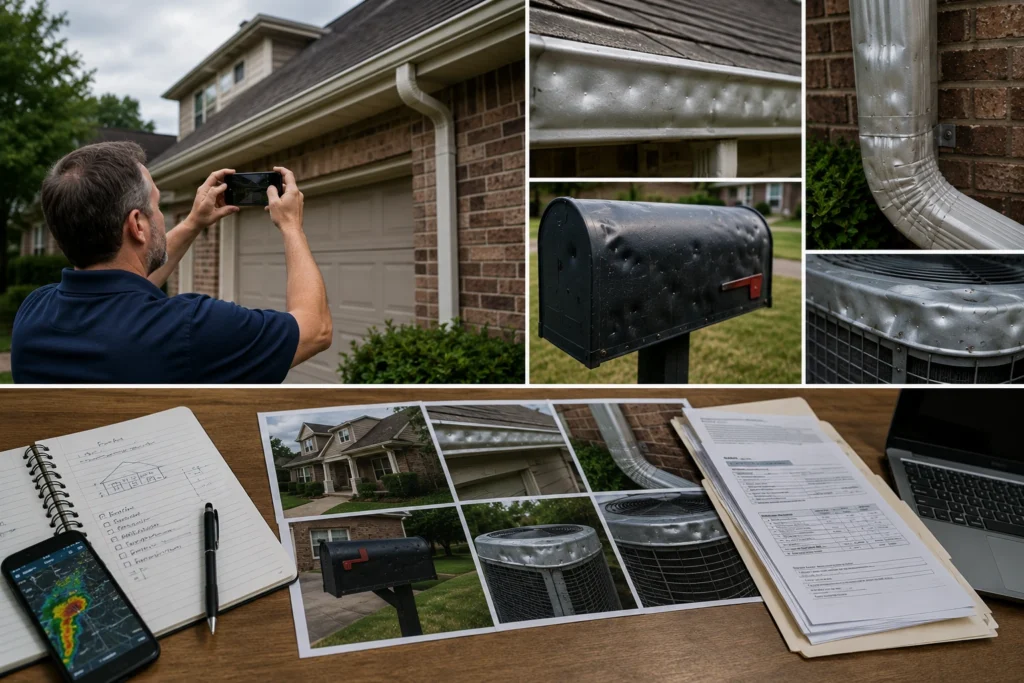
Hailstorms can leave a trail of obvious destruction. Broken windows. Damaged vehicles. Torn shingles. Yet some of the most important evidence in a property insurance claim is often hiding in plain sight. Soft metal hail damage insurance claims frequently become the foundation for proving the extent of a storm’s impact, especially when roof damage is difficult to identify from the ground. Understanding how these claims work can make a significant difference when dealing with an insurance carrier after a severe weather event.
Many policyholders focus entirely on the roof, which is understandable. However, experienced inspectors know that collateral evidence often tells a much larger story. In fact, professionals sometimes refer to soft metal impacts as “The Watchdogs Behind the Claims” because they provide visible clues that help verify storm severity. Small dents on gutters, vents, flashing, and other metal surfaces can become critical pieces of evidence during the claim investigation process.
The challenge is that many homeowners never inspect these areas. Others notice dents but assume they are purely cosmetic and not worth documenting. Unfortunately, that assumption can lead to missed opportunities when pursuing compensation for storm-related losses. Insurance companies, contractors, engineers, and public adjusters frequently evaluate soft metal damage when determining whether hail impacts affected other building components.
Interestingly, the process of evaluating storm damage often resembles methods used in fields such as metallography, where surface conditions are carefully examined to identify patterns and material changes. While property inspections are far less technical, the principle remains similar: small surface evidence can reveal a much larger underlying story. For homeowners in Prosper and throughout North Texas, understanding soft metal hail damage insurance claims is especially important. The region regularly experiences hail-producing storms capable of damaging residential and commercial properties. When severe weather strikes, knowing what to look for and how to document it can significantly strengthen a claim. In this guide, we’ll break down everything homeowners need to know about soft metal hail damage insurance claims, from identifying damage to navigating disputes and maximizing claim outcomes.
What Is Soft Metal Hail Damage?
Soft metals are materials that dent more easily than harder construction components. Because of their composition, they often show visible impact marks after a hailstorm. This characteristic makes them extremely valuable during insurance inspections. While asphalt shingles can sometimes conceal damage, soft metals often provide immediate visual confirmation that hail struck the property.
Common examples include:
- Gutters
- Downspouts
- Roof vents
- Flashing
- Chimney caps
- HVAC condenser units
- Metal trim
- Window wraps
- Garage door trim
- Mailboxes
- Metal fencing
These materials typically react differently to hail than roofing products. A hailstone that leaves only subtle evidence on shingles may leave a clearly visible dent in a gutter or roof vent. That’s exactly why inspectors pay attention to them.
Why Soft Metals Matter So Much After a Hailstorm
Insurance companies rarely make coverage decisions based on a single damaged component. Instead, they evaluate the overall storm impact.
Soft metal damage helps establish several critical facts:
- Hail actually occurred at the property.
- The hail reached a certain size and intensity.
- The storm impacted multiple elevations.
- Damage patterns align with reported weather conditions.
- Additional components may require inspection.
Think of soft metal damage as supporting evidence. If roof damage is the primary issue, soft metals often serve as corroborating proof. Without that evidence, claim disputes become more common. This is one reason soft metal hail damage insurance claims frequently receive significant attention during inspections.
Common Soft Metal Components That Show Hail Damage
Not all soft metals react the same way. Some provide stronger evidence than others. Let’s examine the areas inspectors frequently evaluate.
Gutters and Downspouts
Gutters are often among the first components examined after a hailstorm. Why? Because they provide large, exposed surfaces that frequently display impact marks.
Common signs include:
- Circular dents
- Paint cracking
- Surface scarring
- Distorted edges
Fresh hail impacts typically appear cleaner and more defined than older damage. This distinction becomes important when determining whether damage resulted from a recent storm.
Roof Vents
Roof vents offer another excellent source of evidence. Most vent covers contain thin metal that responds visibly to hail impacts.
Inspectors look for:
- Round indentations
- Multiple impact marks
- Consistent strike patterns
- Directional damage
Because vents sit directly on the roof, they help demonstrate that hail reached roofing surfaces as well.
Flashing
Flashing protects vulnerable roof transitions.
It is commonly installed around:
- Chimneys
- Skylights
- Roof penetrations
- Wall intersections
Dented flashing may indicate that nearby roofing materials experienced similar impacts.
HVAC Condenser Units
HVAC systems often become key pieces of evidence. Condenser units contain delicate metal fins that can be damaged by hail.
Potential issues include:
| Type of Damage | Potential Consequence |
| Fin denting | Reduced airflow |
| Coil damage | Reduced efficiency |
| Exterior impacts | Cosmetic or functional concerns |
| Severe fin compression | Potential system performance loss |
HVAC damage may create separate claim considerations beyond roofing repairs.
Window Trim and Exterior Metal Surfaces
Window wraps, trim pieces, and decorative metal accents can reveal valuable storm evidence.
Inspectors evaluate:
- Dent density
- Impact direction
- Distribution patterns
- Consistency across elevations
Together, these observations help create a complete storm damage profile.
Why Insurance Companies Pay Attention to Soft Metal Damage
Many homeowners assume insurance adjusters focus exclusively on roofing systems. That is rarely the case. Soft metal evidence often serves as an objective indicator of storm activity.
When an adjuster arrives, they may ask questions such as:
- Did hail impact multiple surfaces?
- Are damage patterns consistent?
- Does collateral evidence support roof findings?
- Are impacts recent or pre-existing?
The answers influence coverage decisions. In many cases, soft metal damage helps confirm that a storm caused the loss. Without supporting evidence, insurers may question whether roof conditions resulted from age, wear, installation defects, or unrelated factors. This is one reason soft metal hail damage insurance claims often receive detailed scrutiny.
Understanding the Difference Between Cosmetic and Functional Damage
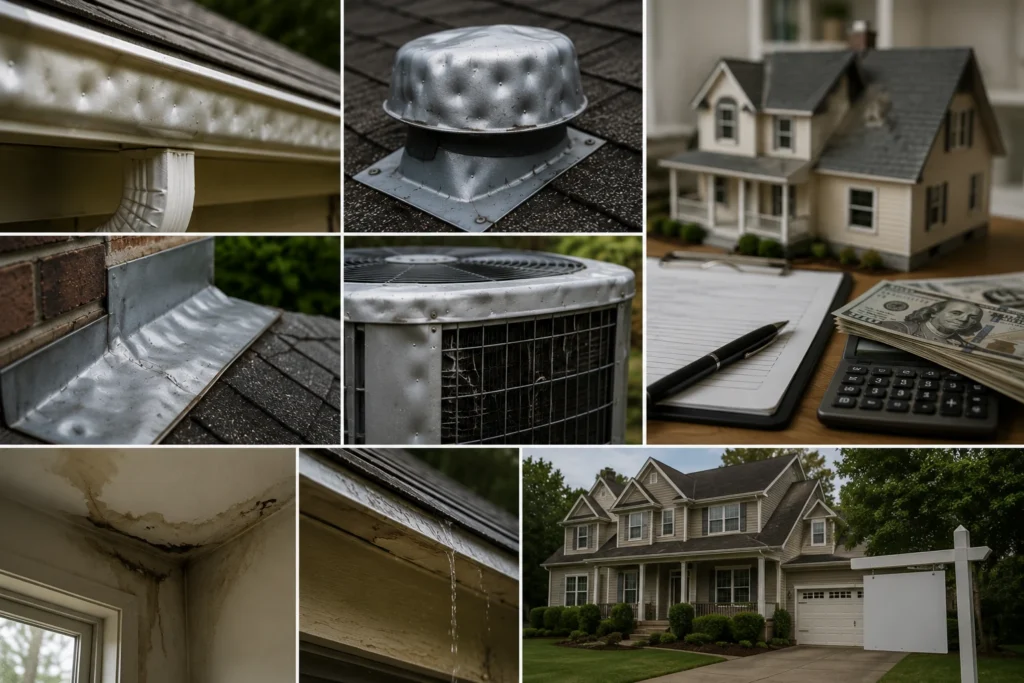
One of the most disputed aspects of hail claims involves cosmetic versus functional damage. The distinction can significantly impact coverage.
Cosmetic Damage
Cosmetic damage affects appearance but not performance.
Examples may include:
- Minor dents
- Surface blemishes
- Paint scuffs
- Small indentations
The component continues performing its intended function.
Functional Damage
Functional damage affects performance, lifespan, or weather resistance.
Examples include:
- Compromised flashing
- Reduced HVAC efficiency
- Water intrusion risks
- Structural deformation
Insurance policies vary considerably regarding cosmetic damage coverage. Some policies contain cosmetic exclusions. Others provide broader protection. Carefully reviewing policy language is essential.
How Hail Size Influences Damage Severity
Not all hailstorms create the same outcome. Size matters. So does density. So does wind speed. The relationship between hail size and damage potential is significant.
Small Hail
Generally under one inch.
Possible outcomes include:
- Light denting
- Minor cosmetic impacts
- Limited collateral damage
Moderate Hail
Approximately one to two inches.
Possible outcomes include:
- Noticeable gutter dents
- Vent impacts
- Flashing damage
- Roof bruising
Large Hail
Over two inches.
Potential consequences increase dramatically:
- Significant soft metal deformation
- Roof system damage
- Broken windows
- HVAC impacts
- Siding damage
Wind-driven hail further increases severity because impact velocity rises. The result?
Smaller hailstones can sometimes produce damage comparable to larger hail under calmer conditions.
How Adjusters Investigate Soft Metal Hail Damage Insurance Claims
A proper inspection involves much more than a quick visual review. Professional claim investigations often include several steps.
Property Inspection
The adjuster examines:
- Roof surfaces
- Gutters
- Downspouts
- Flashing
- HVAC units
- Exterior elevations
Every impacted component helps build the claim narrative.
Photographic Documentation
Photographs create a permanent record. Good documentation includes:
- Wide-angle images
- Close-up damage photos
- Context shots
- Elevation-specific evidence
Quality photographs frequently become crucial during disputes.
Weather Verification
Adjusters often review:
- Radar records
- Storm reports
- Hail maps
- Meteorological data
These sources help verify storm occurrence and severity.
Damage Pattern Analysis
Inspectors compare:
- Impact direction
- Dent characteristics
- Surface conditions
- Distribution patterns
Consistency strengthens causation arguments.
Common Reasons Soft Metal Hail Claims Are Denied
Not every claim is approved. Understanding common denial reasons helps homeowners avoid mistakes.
Insufficient Documentation
Weak evidence remains one of the leading causes of claim disputes. Photos matter. Inspection reports matter. Timelines matter. Documentation matters. Everything matters.
Wear and Tear Allegations
Insurance policies generally cover sudden storm damage. They do not cover ordinary aging.
As a result, insurers may argue that certain conditions resulted from:
- Corrosion
- Oxidation
- Normal deterioration
- Long-term exposure
Strong documentation helps counter these arguments.
Delayed Reporting
Time is rarely your friend after a hailstorm.
Delays create challenges because:
- Damage conditions change.
- Repairs may occur.
- Evidence deteriorates.
- Weather records become harder to correlate.
Prompt action strengthens claim credibility.
Pre-Existing Damage Arguments
Previous storms sometimes complicate matters. Insurers may question whether impacts occurred during the claimed event. This is why obtaining timely inspections is so important.
How Homeowners Should Document Soft Metal Damage
Proper documentation can dramatically improve the outcome of soft metal hail damage insurance claims. The key is acting quickly. Not recklessly. Not emotionally. Quickly and methodically.
Start With a Safe Visual Inspection
Never climb onto a roof immediately after a storm. Instead, inspect visible areas from the ground.
Look for:
- Dented gutters
- Damaged downspouts
- Impacts on mailbox surfaces
- Metal trim damage
- HVAC unit dents
Take notes while observations are fresh.
Photograph Everything
Many homeowners underestimate the value of photos. Then months later they regret it.
Capture:
- Wide property shots
- Individual damaged components
- Multiple angles
- Close-up impact marks
- Date-stamped images if possible
More documentation is usually better.
Create a Storm File
Organize everything in one location.
Include:
| Documentation Type | Why It Matters |
| Photos | Visual evidence |
| Weather reports | Storm verification |
| Inspection reports | Professional opinions |
| Repair estimates | Damage valuation |
| Insurance letters | Claim tracking |
| Contractor notes | Supplemental support |
A well-organized file often simplifies the claims process.
The Relationship Between Soft Metal Damage and Roof Damage
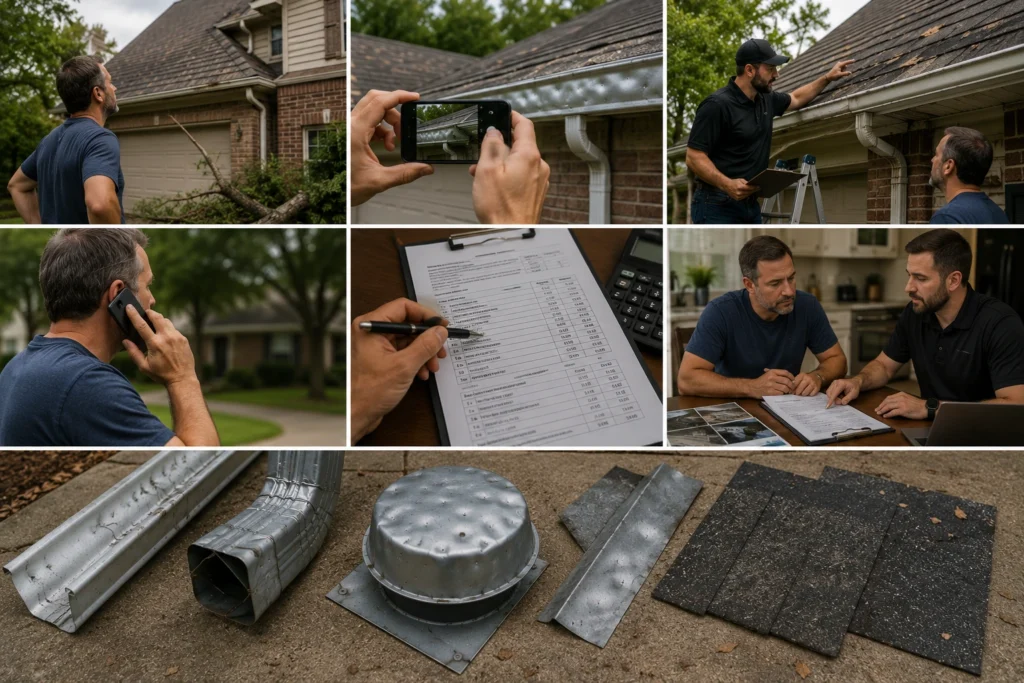
Many homeowners wonder why adjusters spend so much time examining gutters and vents when the roof is the primary concern. The answer is surprisingly simple. Roof damage can be difficult to see. Soft metal damage often isn’t. Asphalt shingles may show subtle bruising or granule displacement that requires close inspection. By contrast, a dented roof vent may immediately reveal the force of a hail impact.
That’s why soft metal hail damage insurance claims often become closely connected to roof replacement discussions. When multiple soft metal surfaces display consistent impacts, inspectors may have stronger evidence that roofing materials experienced similar forces. This does not automatically guarantee roof replacement. However, it often supports a more thorough evaluation.
Asphalt Shingle Roofs
For asphalt roofs, inspectors may compare:
- Soft metal impacts
- Shingle bruising
- Granule loss
- Mat fractures
The combined evidence creates a broader picture.
Metal Roof Systems
Metal roofing presents different challenges. Dents are often easier to identify. Coverage questions, however, may focus on whether damage is cosmetic or functional.
Tile and Slate Roofs
Tile and slate materials can crack under hail impacts. Soft metal evidence may help verify storm intensity when evaluating these systems.
Soft Metal Hail Damage on Commercial Properties
Commercial claims introduce another layer of complexity. Larger structures contain more components. More components create more potential damage. Office buildings, retail centers, industrial facilities, and multifamily properties often contain extensive soft metal surfaces.
Examples include:
- Commercial gutters
- Roof-mounted equipment
- Mechanical enclosures
- Flashing systems
- Metal coping
- HVAC infrastructure
Inspection scopes can become substantial. In many commercial losses, soft metal evidence helps determine whether further destructive testing or engineering evaluations are necessary. The financial stakes can also be much higher. Even seemingly minor damage may affect operations, maintenance costs, and future repairs.
The Financial Impact of Soft Metal Damage
Some property owners dismiss soft metal damage because the dents appear small. That can be a costly mistake. Small impacts sometimes indicate larger underlying issues. Potential financial consequences may include:
Repair Costs
Damaged components often require repair or replacement.
Examples include:
- Gutters
- Flashing
- Vents
- HVAC components
Costs add up quickly.
Water Intrusion Risks
Compromised flashing or drainage systems may allow moisture infiltration. Water damage rarely gets cheaper over time.
HVAC Efficiency Losses
Dented condenser fins can reduce airflow. Reduced airflow may increase energy consumption and strain equipment.
Property Value Concerns
Visible storm damage can affect curb appeal. For some property owners, appearance alone represents a meaningful concern.
Underpaid Claims
One of the largest financial risks occurs when legitimate damage is overlooked.
Incomplete inspections can result in:
- Missing line items
- Underestimated repair costs
- Reduced settlement values
Thorough inspections help minimize these risks.
What Homeowners in Prosper Should Do After a Hailstorm
When a major hailstorm moves through Prosper, emotions often run high. Neighbors compare damage. Contractors start knocking on doors. Insurance questions begin immediately. Having a clear plan helps.
Step 1: Perform a Preliminary Inspection
Start with visible areas. Document obvious impacts. Do not take unnecessary risks.
Step 2: Photograph Potential Damage
Create a visual record before conditions change. Weather can alter evidence surprisingly quickly.
Step 3: Schedule a Professional Inspection
Professional evaluations often identify damage that homeowners overlook. This includes both roof damage and soft metal impacts.
Step 4: Notify Your Insurance Carrier
Prompt reporting preserves important timelines.
It also demonstrates diligence.
Step 5: Review the Insurance Estimate Carefully
Many property owners focus only on the final settlement number.
That can be a mistake.
The scope of work often matters more.
Review every line item.
Look for:
- Missing components
- Incomplete repairs
- Overlooked soft metal damage
- HVAC exclusions
- Flashing omissions
Step 6: Obtain a Second Opinion if Necessary
Not all inspections reach the same conclusions. Additional professional evaluations can provide valuable perspective.
Step 7: Preserve Evidence
Avoid discarding damaged materials before the claim is resolved. Evidence matters. Sometimes more than people realize. For homeowners throughout Prosper, following these steps can help create a stronger foundation for a successful claim.
How a Public Adjuster Can Help With Soft Metal Hail Damage Insurance Claims
Insurance policies are complex. Claim investigations can be even more complex. This is where public adjusters often become valuable resources. Unlike insurance company adjusters, public adjusters work on behalf of policyholders. Their objective is straightforward. Help ensure damages are properly identified, documented, and presented.
Independent Damage Assessment
Public adjusters conduct their own evaluations. This independent perspective can uncover overlooked issues.
Policy Analysis
Coverage questions often hinge on policy language. Understanding exclusions, limitations, and endorsements is critical.
Documentation Support
Strong claims require strong evidence.
Public adjusters help organize:
- Photos
- Inspection reports
- Estimates
- Supporting documentation
Scope Review
One of the most common claim disputes involves scope. Public adjusters compare documented damage against the carrier’s estimate. Differences may reveal missing items.
Supplemental Claim Preparation
Additional damage sometimes emerges later. Supplemental claims provide a mechanism for addressing newly identified issues.
Negotiation Assistance
Insurance claims involve communication. Lots of it.
Public adjusters help navigate discussions regarding:
- Damage scope
- Repair costs
- Coverage interpretation
- Settlement valuations
For many homeowners, this support reduces stress while improving claim clarity.
Frequently Overlooked Soft Metal Damage
Some of the most valuable evidence often hides in unexpected places. Inspectors who rush may miss these areas.
Chimney Caps
Metal chimney caps frequently display hail impacts.
Roof Accessories
Satellite mounts, exhaust caps, and ancillary components may provide important clues.
Patio Covers
Aluminum patio structures often reveal clear impact patterns.
Metal Fence Components
Fence posts, gates, and decorative metal sections can help verify storm direction and intensity.
Exterior Mechanical Equipment
Mechanical housings and utility enclosures may contain visible evidence of hail activity. Every impacted surface contributes to the overall claim picture.
Mistakes Homeowners Should Avoid
Some claim mistakes are surprisingly common. Fortunately, they are also avoidable.
Waiting Too Long
Time weakens evidence. Act promptly.
Failing to Document Damage
Verbal descriptions are rarely enough. Photographs tell a stronger story.
Making Permanent Repairs Too Soon
Emergency mitigation may be necessary. Permanent repairs should generally wait until inspections are completed.
Accepting Initial Findings Without Review
Insurance estimates are important. They are not always final. Questions are appropriate. Second opinions can be valuable.
Assuming Dents Are Purely Cosmetic
Not every dent is insignificant.
Further evaluation may reveal broader implications.
Why Soft Metal Damage Often Becomes the Key Evidence
Here’s the reality. Insurance claims frequently become disputes about proof. Not opinions. Not assumptions. Proof. Soft metal damage provides visible, measurable, photographable evidence.
It helps establish:
- Storm occurrence
- Storm intensity
- Impact direction
- Damage consistency
- Property-wide effects
That’s why soft metal hail damage insurance claims continue to play such a significant role in property loss investigations. When properly documented, these impacts often become some of the strongest evidence available.
Conclusion
Hailstorms may last only a few minutes, but their effects can remain for years. Soft metal damage is often one of the clearest indicators that a property experienced significant hail impacts. Dented gutters, damaged vents, impacted flashing, and compromised HVAC components frequently provide crucial supporting evidence when evaluating larger property losses. Understanding soft metal hail damage insurance claims helps homeowners make informed decisions after a storm. Proper documentation, timely inspections, organized records, and careful claim review all contribute to stronger outcomes.
For property owners in Prosper and across North Texas, preparation matters. The sooner damage is documented and professionally evaluated, the easier it becomes to preserve evidence and support a claim. When questions arise, professional guidance can make a meaningful difference. Soft metal damage may seem minor at first glance, but in many cases, it becomes one of the most important pieces of evidence in the entire claim process. If you suspect hail damage following a recent storm, don’t assume small dents are insignificant. A comprehensive inspection today may uncover evidence that protects your property and your financial interests tomorrow.
FAQs
Soft metal hail damage refers to dents or impact marks on materials such as gutters, vents, flashing, and HVAC units caused by hailstones during a storm.
Soft metals often show visible impact evidence more clearly than roofing materials, helping adjusters verify storm severity and property-wide damage.
Yes. Visible impacts on soft metals can serve as supporting evidence that hail struck the roof and may have caused damage to roofing materials.
Coverage depends on the specific policy language. Some policies may limit or exclude cosmetic damage while covering functional damage.
Cosmetic damage affects appearance, while functional damage impacts the performance, lifespan, or weather resistance of a component.
You should report potential hail damage as soon as possible after the storm to preserve evidence and avoid issues related to delayed reporting.
Common examples include gutters, downspouts, roof vents, flashing, chimney caps, HVAC units, window trim, and metal fencing.
Yes. Hail can dent condenser fins, damage coils, and reduce airflow, potentially affecting system efficiency and performance.
Photos provide visual evidence of damage and help support claim documentation during inspections, reviews, and potential disputes.
A public adjuster can help evaluate damage, review policy language, organize evidence, and negotiate with the insurance company on your behalf.