
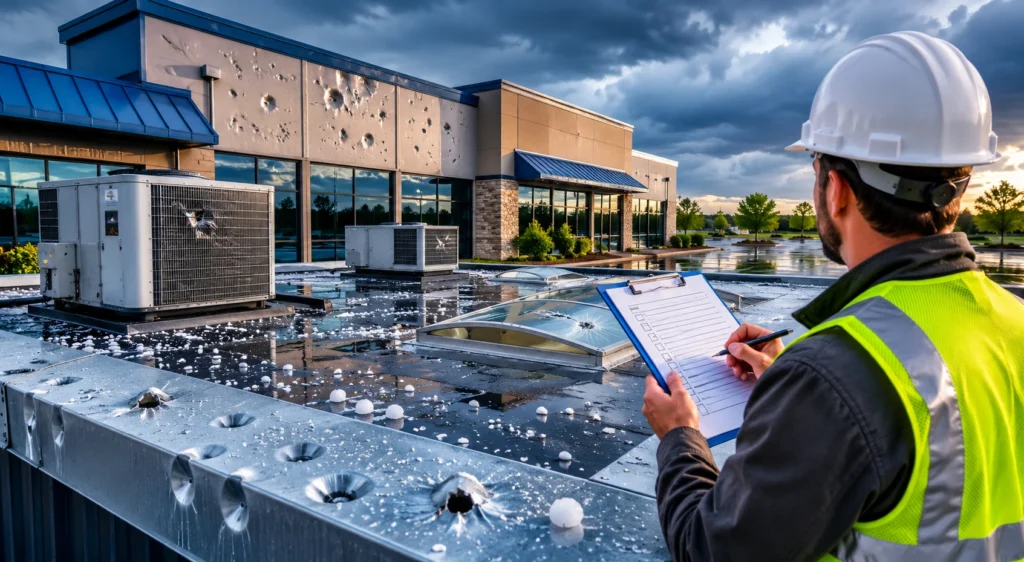
A commercial hail damage insurance claim can become one of the most financially significant events a business owner ever faces. One severe storm can damage roofing systems, HVAC equipment, exterior finishes, signage, and critical building components within minutes. The challenge is not simply identifying damage. The challenge is ensuring the insurance claim accurately reflects the full extent of the loss. For commercial property owners in Prosper, understanding the claim process before disaster strikes can make a substantial difference in the final outcome. Hailstorms often leave behind obvious signs of damage. Dented metal surfaces. Cracked skylights. Damaged rooftop equipment. However, some of the most expensive issues remain hidden from view. Water intrusion, compromised roofing membranes, and damaged mechanical systems frequently emerge weeks or even months later.
That is why commercial property owners cannot afford to take a wait-and-see approach. The reality is simple. Commercial claims are different from residential claims. The buildings are larger. The roofing systems are more complex. The financial stakes are significantly higher. A mistake that costs a homeowner a few thousand dollars could cost a business owner hundreds of thousands. Many business owners assume the insurance company will automatically identify every damaged component during the inspection process. Sometimes that happens. Sometimes it does not. Commercial buildings contain numerous systems that must be evaluated individually. Roofing materials, drainage systems, rooftop HVAC units, flashing, skylights, electrical components, solar equipment, and structural elements may all be affected by the same storm event. Missing just one category of damage can dramatically impact a claim settlement.
For business owners in Prosper, where severe weather is a regular concern, understanding how commercial hail claims work is not simply useful. It is essential. When hail impacts a commercial property, the goal should not be to file a claim as quickly as possible. The goal should be to file an accurate claim supported by strong documentation and professional evidence. That distinction matters. Insurance carriers evaluate claims based largely on documentation. Contractors rely on documentation. Engineers rely on documentation. Ultimately, the quality of the evidence often influences the quality of the outcome. A successful claim starts long before settlement discussions begin. The most effective property owners focus on preparation, organization, and thorough inspections from day one.
Interestingly, damage assessment often relies on highly specialized forms of analysis. In scientific disciplines, concepts such as fracture mechanics help engineers understand how materials fail under stress and impact. While commercial hail inspections involve different applications, the underlying principle remains similar: understanding how forces affect building materials is critical when evaluating damage.
Why Commercial Properties Are Especially Vulnerable to Hail Damage
Commercial buildings present unique challenges during hail events. Their size alone increases exposure. A residential roof may cover a few thousand square feet. A warehouse, distribution center, retail center, or office complex may contain tens of thousands of square feet of roofing surface. More surface area means more opportunities for damage.
Flat and low-slope commercial roofs are particularly vulnerable because impacts can affect large sections simultaneously. Unlike steep residential roofs that shed water quickly, commercial systems often depend on membranes, drains, flashing, and seams working together perfectly. Even minor hail impacts can compromise these systems.
Common commercial properties affected by hail include:
- Office buildings
- Medical facilities
- Retail centers
- Shopping plazas
- Industrial buildings
- Warehouses
- Apartment complexes
- Hotels
- Educational facilities
- Churches
Each property type presents unique inspection challenges. A retail center may have extensive rooftop mechanical equipment. An industrial facility may contain specialized ventilation systems. Apartment communities may involve multiple buildings under a single policy.As complexity increases, claim management becomes more important.
Types of Commercial Hail Damage Insurance Companies Look For
Not all hail damage looks the same. Different building materials respond differently to impact. Understanding what adjusters and inspectors evaluate can help property owners identify potential issues before they become expensive surprises.
Roofing Damage
Roof systems often receive the most attention after a storm.
Commercial roofing materials commonly include:
- TPO roofing
- EPDM roofing
- Modified bitumen
- Built-up roofing
- Metal roofing systems
- Spray polyurethane foam roofing
Each material reacts differently when struck by hail. Some materials show obvious punctures or fractures. Others experience subtle degradation that requires professional testing and analysis. What appears cosmetic initially may later prove functional.
HVAC Equipment Damage
Rooftop HVAC systems frequently suffer hail impacts.
Potential damage includes:
- Bent condenser fins
- Damaged coils
- Reduced airflow
- Efficiency losses
- Refrigerant system issues
These problems may not immediately affect operation. Months later, however, businesses may discover higher energy costs or premature equipment failure.
Exterior Building Components
Hail rarely limits itself to roofing.
Inspectors should evaluate:
- Gutters
- Downspouts
- Flashing
- Siding
- Skylights
- Windows
- Exterior doors
- Canopies
Visible dents often provide important evidence regarding storm severity and impact direction.
Signage and Exterior Equipment
Business signs frequently sustain substantial hail damage.
Additional vulnerable components include:
- Solar panels
- Mechanical equipment
- Security enclosures
- Exterior lighting
- Fencing systems
These items are sometimes overlooked during initial inspections. That can become costly later.
Hidden Commercial Hail Damage That Often Gets Missed
The most expensive damage is not always the most visible. This is one of the biggest misconceptions surrounding a commercial hail damage insurance claim. Many property owners expect significant hail damage to be obvious. Unfortunately, hidden damage is common.
Functional Versus Cosmetic Damage
Insurance discussions frequently revolve around this distinction. Cosmetic damage affects appearance. Functional damage affects performance. A dented metal panel may appear harmless. However, if that damage compromises weather resistance, drainage, or structural integrity, the issue becomes functional rather than cosmetic. The distinction often influences claim outcomes.
Roofing Membrane Damage
Commercial roofing membranes can experience:
- Compression fractures
- Surface ruptures
- Seam damage
- Protective coating loss
These issues may not leak immediately. Instead, deterioration develops gradually over time. Months later, building owners discover moisture infiltration that originated during the original storm.
Moisture Intrusion
Water is patient. Once moisture enters a commercial roofing system, it can spread extensively before visible symptoms appear.
Potential consequences include:
- Mold growth
- Insulation saturation
- Structural deterioration
- Ceiling damage
- Electrical concerns
By the time interior symptoms appear, repair costs may have increased significantly.
Roofing Accessories
Accessories often receive less attention than roofing surfaces. However, damaged accessories can trigger major problems.
Inspectors should evaluate:
- Pipe boots
- Flashing
- Expansion joints
- Roof penetrations
- Drainage systems
These components play critical roles in keeping water out of the building.
Understanding Commercial Property Insurance Coverage
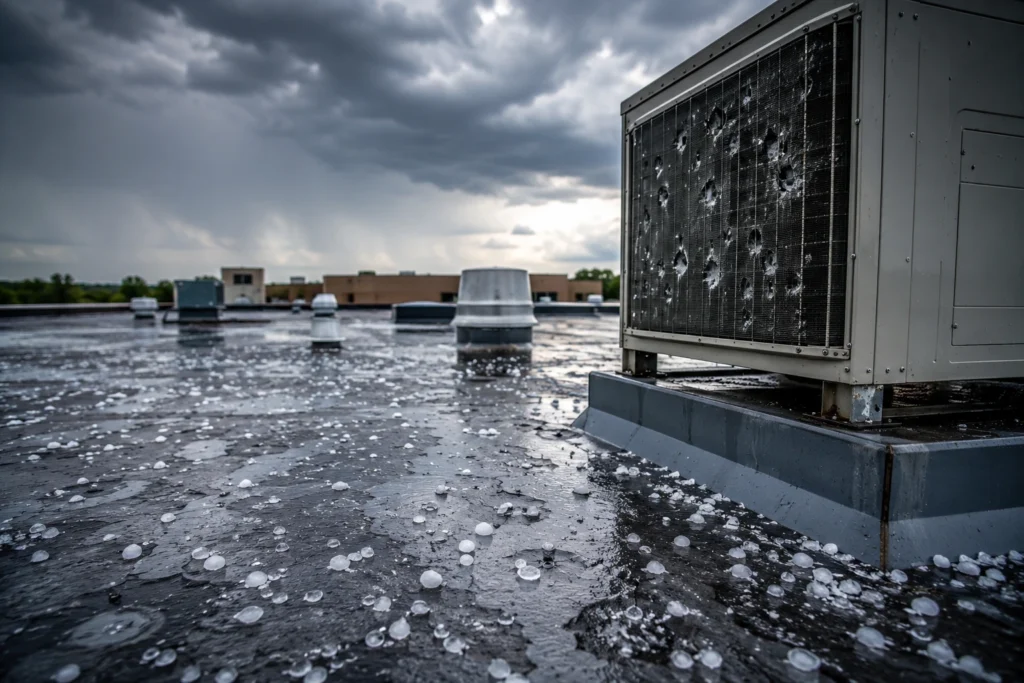
Insurance policies contain valuable protections. They also contain limitations. Understanding both is critical. Many property owners discover coverage details only after a loss occurs. That timing creates unnecessary complications.
What Commercial Property Insurance Typically Covers
Coverage frequently applies to:
- Building structures
- Roofing systems
- Mechanical equipment
- Certain exterior components
- Storm-related damage
- Covered repair costs
However, every policy differs. Assumptions can be expensive.
Wind and Hail Deductibles
Commercial policies often contain separate deductibles for wind and hail losses.
These deductibles may be:
- Fixed dollar amounts
- Percentage-based deductibles
- Building-specific deductibles
A percentage deductible can significantly impact out-of-pocket expenses. Property owners should understand these provisions before filing a claim.
Replacement Cost Versus Actual Cash Value
The valuation method matters. Replacement Cost Value (RCV) generally pays for replacing damaged property with similar materials. Actual Cash Value (ACV) factors depreciation into the calculation. The financial difference can be substantial.
Business Interruption Coverage
Physical damage is only part of the story. Many businesses also experience operational disruption following major hail events.
Business interruption coverage may help address:
- Lost income
- Reduced operations
- Temporary closures
- Continuing expenses
Understanding these provisions before a loss occurs allows businesses to prepare more effectively.
The Commercial Hail Damage Insurance Claim Process
Filing a commercial hail damage insurance claim involves more than making a phone call. Successful claims follow a structured process.
Step 1: Secure the Property
Prevent additional damage whenever possible.
Temporary repairs may include:
- Emergency tarping
- Water mitigation
- Protective coverings
- Safety measures
Documentation should occur before repairs whenever conditions allow.
Step 2: Document Everything
Photographs remain one of the strongest forms of evidence.
Capture:
- Roofing damage
- Exterior impacts
- Interior leaks
- Equipment damage
- Structural concerns
The more comprehensive the documentation, the stronger the claim file becomes.
Step 3: Schedule a Professional Inspection
Professional evaluations frequently identify issues that property owners miss.
Commercial inspections may involve:
- Roofing specialists
- Engineers
- Building consultants
- Mechanical experts
The complexity of the property often determines the level of expertise required.
Step 4: Review the Policy
Before major discussions occur, understand:
- Coverage provisions
- Deductibles
- Exclusions
- Reporting requirements
- Claim deadlines
Policy language influences nearly every stage of the claim process.
Step 5: Meet With the Insurance Adjuster
The adjuster inspection is an important milestone. Preparation matters. Documentation matters. Professional representation often matters. The goal is to ensure all storm-related damage receives appropriate consideration rather than focusing solely on the most visible issues.
Signs Your Commercial Hail Damage Insurance Claim May Be Underpaid
Receiving a settlement offer does not automatically mean the claim process is complete. Many commercial property owners assume the insurance carrier’s estimate reflects every damaged component identified during the inspection process. Sometimes it does. Other times, important items are missing.
A common warning sign involves a significant difference between contractor estimates and insurance estimates. While pricing variations are normal, major discrepancies deserve closer review.
Several issues frequently contribute to underpaid claims:
- Missing roofing components
- Overlooked HVAC damage
- Incomplete repair scopes
- Building code upgrade omissions
- Underestimated labor costs
- Low material pricing
- Failure to include necessary accessories
The challenge is that most business owners do not review claims every day. Insurance professionals do. That experience gap can make it difficult to recognize when something has been missed. For example, a roof replacement estimate may include membrane replacement but exclude damaged insulation beneath the roofing system. The numbers may initially appear reasonable until a contractor begins the repair process and discovers additional storm-related damage. Similarly, HVAC units can present hidden issues that are not immediately visible during a routine inspection. When large commercial assets are involved, even small omissions can create substantial financial consequences.
The Role of a Public Adjuster in a Commercial Hail Damage Insurance Claim
Commercial claims often involve multiple inspections, extensive documentation, and complicated negotiations. That is one reason many business owners seek professional assistance. A public adjuster works on behalf of the policyholder rather than the insurance company.
Their responsibility is to evaluate the loss, document damage, organize evidence, and assist with the claim process. This distinction is important. Insurance adjusters represent the insurance carrier. Public adjusters represent the property owner. The difference becomes easier to understand when viewed side by side.
| Public Adjuster | Insurance Adjuster |
| Represents policyholder | Represents insurer |
| Evaluates full loss scope | Evaluates claim for carrier |
| Organizes claim documentation | Reviews submitted evidence |
| Negotiates settlement | Determines carrier position |
| Focuses on policyholder interests | Focuses on carrier obligations |
Large commercial claims frequently involve numerous moving parts.
There may be:
- Multiple buildings
- Roofing consultants
- Engineers
- Mechanical experts
- Property managers
- Contractors
- Financial documentation
Coordinating these components requires organization and attention to detail. Professional claim management often helps ensure important information does not fall through the cracks.
Commercial Roofing Systems and Hail Damage Challenges
Commercial roofs are not all built the same. Different systems require different evaluation methods. This is one reason commercial inspections should never rely solely on visual observations from the ground.
Metal Roofing Systems
Metal roofs often display obvious hail impacts. However, visible dents do not always tell the whole story.
Inspectors must evaluate:
- Seam integrity
- Protective coatings
- Fasteners
- Flashing systems
- Drainage performance
The distinction between cosmetic and functional damage often becomes a key discussion point.
TPO Roofing Systems
TPO roofs are common throughout commercial properties.
While durable, they can sustain:
- Membrane punctures
- Surface fractures
- Seam separation
- Impact stress
Some forms of damage remain difficult to detect without close inspection.
Modified Bitumen Roofing
Modified bitumen systems frequently experience:
- Granule displacement
- Surface cracking
- Membrane damage
- Impact bruising
Even seemingly minor impacts can reduce long-term performance.
Built-Up Roofing Systems
Built-up roofs consist of multiple layers working together. Damage to one layer may affect the entire assembly. Comprehensive inspections help determine the full extent of the loss.
Spray Foam Roofing
Spray foam systems can develop:
- Compression damage
- Coating fractures
- Moisture infiltration pathways
Because water intrusion often develops gradually, early identification remains critical.
Business Interruption Losses Following Hail Damage
The roof is not always the biggest financial concern. Sometimes the business interruption becomes even more costly. Commercial property owners often focus exclusively on physical damage while overlooking operational impacts.
A severe hail event may cause:
- Temporary closures
- Reduced customer traffic
- Equipment downtime
- Tenant disruptions
- Inventory concerns
- Lost revenue
For some businesses, even a brief interruption can create significant financial strain. Imagine a medical facility with water intrusion affecting operations. Or a retail center forced to close portions of the property during repairs. Or a warehouse experiencing equipment failures linked to storm damage. The losses extend beyond repair invoices. Business interruption coverage may help address some of these financial impacts when coverage applies. Documentation becomes especially important.
Helpful records may include:
- Financial statements
- Revenue reports
- Payroll records
- Lease agreements
- Operational logs
- Repair timelines
The stronger the documentation, the easier it becomes to demonstrate financial losses associated with the storm event.
What Commercial Property Owners in Prosper Should Do Immediately After a Hailstorm
The first few days following a storm can significantly influence claim outcomes. A structured response helps preserve evidence and reduce complications.
Conduct a Preliminary Inspection
Begin with visible areas.
Look for:
- Dented metal components
- Broken skylights
- Damaged signage
- Water intrusion
- Roofing concerns
Safety should always remain the priority. Avoid unnecessary roof access.
Photograph Everything
Conditions change quickly. Documentation should begin as soon as practical.
Capture:
- Exterior damage
- Interior impacts
- Rooftop equipment
- Building elevations
- Drainage systems
Wide-angle photos and close-up images both provide value.
Protect the Property
Reasonable mitigation efforts help prevent additional damage.
Examples include:
- Temporary coverings
- Water removal
- Emergency repairs
- Safety barriers
Keep records of all mitigation expenses.
Schedule an Independent Inspection
Professional inspections often reveal damage that property owners overlook. Independent evaluations provide valuable insight before settlement discussions begin.
Preserve Damaged Materials
Whenever practical, retain damaged materials. These materials may later serve as evidence during claim reviews or disputes.
Maintain Organized Records
Claim files should contain:
- Inspection reports
- Estimates
- Correspondence
- Photographs
- Invoices
- Weather documentation
Organization creates clarity. Clarity helps claims move more efficiently.
Common Mistakes That Can Hurt a Commercial Hail Damage Insurance Claim
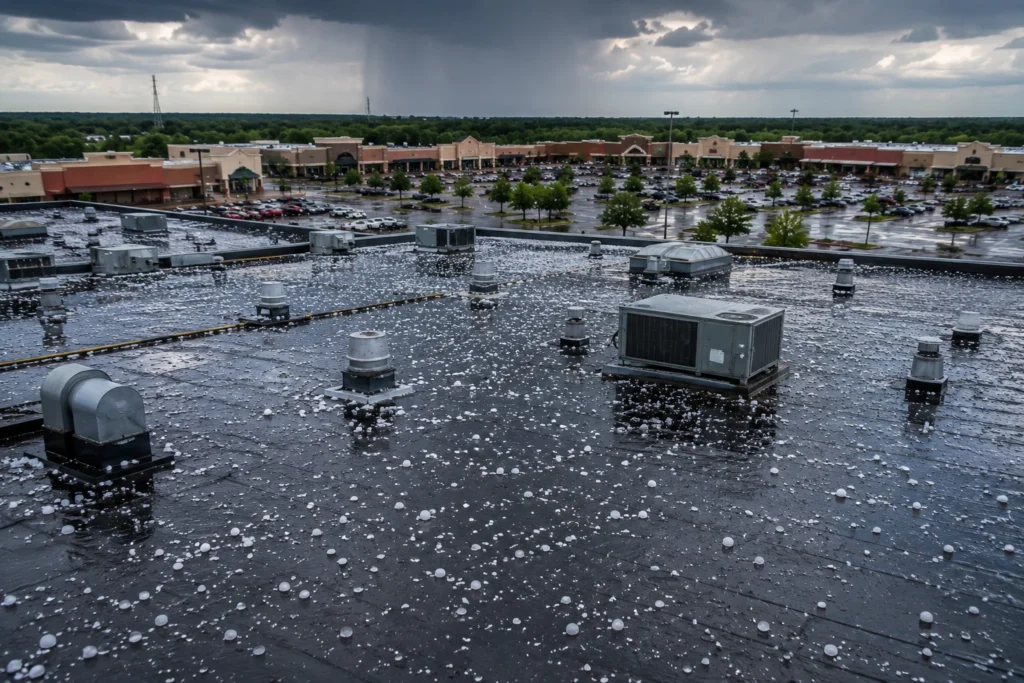
Many claim problems are avoidable. Unfortunately, they remain common.
Waiting Too Long
Delays can create challenges. Evidence may deteriorate. Memories fade. Additional weather events can complicate the investigation. Prompt action helps preserve important information.
Inadequate Documentation
Strong claims rely on strong evidence. Insufficient documentation often leads to questions that could have been avoided.
Accepting the First Estimate Without Review
The initial estimate should be reviewed carefully.
Business owners should understand:
- What is included
- What is excluded
- What assumptions were made
Questions are normal. Review is essential.
Ignoring Mechanical Equipment
Roof damage often receives immediate attention. Mechanical systems do not always receive the same level of scrutiny. That can be a mistake. HVAC equipment, electrical systems, and other rooftop assets may sustain substantial damage.
Disposing of Damaged Materials Too Soon
Evidence matters. Removing damaged materials before documentation is complete can weaken a claim presentation.
Overlooking Soft Metal Damage
One area that frequently provides important evidence involves metal components.
Items such as:
- Gutters
- Downspouts
- Roof vents
- Flashing
- HVAC housings
often display impact marks that help establish storm severity. This is one reason many professionals pay close attention to Soft Metal Hail Damage Insurance Claims during commercial loss investigations. These components often tell an important part of the damage story.
When to Seek Professional Assistance
Not every claim requires outside assistance. Some claims are relatively straightforward. Others are not.
Professional assistance may be beneficial when dealing with:
- Large commercial losses
- Multi-building properties
- Extensive roofing systems
- Denied claims
- Underpaid claims
- Business interruption disputes
- Complex policy issues
Commercial properties involve significant financial exposure. The larger the loss, the more important accuracy becomes. Experienced professionals can help identify overlooked issues, organize documentation, and ensure the claim reflects the full scope of covered damage.
Why Prosper Commercial Property Owners Trust Professional Claim Representation
Commercial property owners in Prosper face many of the same challenges seen throughout North Texas. Severe storms arrive with little warning. Damage is not always obvious. Insurance claims can become complicated. That combination creates risk. Professional claim representation helps bring structure to what can otherwise become an overwhelming process.
Benefits often include:
- Thorough inspections
- Detailed documentation
- Organized claim presentation
- Professional negotiation
- Greater claim clarity
- Reduced administrative burden
Most importantly, business owners can remain focused on operating their businesses while the claim process moves forward. For many organizations, that alone provides significant value. Whether managing an office complex, industrial facility, retail center, apartment community, or warehouse, property owners in Prosper benefit from understanding how commercial hail claims work before the next storm arrives.
Final Thoughts
A commercial hail damage insurance claim involves far more than repairing a roof. It may involve mechanical systems, building envelopes, signage, drainage components, tenant concerns, operational disruptions, and business income losses. The larger the property, the more complex the claim often becomes.
That is why preparation matters. Documentation matters. Professional inspections matter. Most importantly, understanding the process matters. Commercial property owners in Prosper who act quickly, document thoroughly, and carefully evaluate every aspect of storm-related damage place themselves in a stronger position throughout the claim process. When severe weather strikes, the goal is not simply to file a claim. The goal is to ensure the claim accurately reflects the full extent of the covered loss so the property, the business, and future operations can recover as efficiently as possible.
FAQs
A commercial hail damage insurance claim is a request for coverage under a commercial property insurance policy after hail damages a business property.
You should report the damage as soon as possible to preserve evidence and comply with policy reporting requirements.
Yes. Hail can damage roofing membranes and protective surfaces, allowing problems to develop over time before leaks become visible.
Many commercial property policies cover hail-related HVAC damage, but coverage depends on the specific policy terms and exclusions.
Photographs, inspection reports, repair estimates, weather records, invoices, and maintenance records can all strengthen a claim.
Commercial properties often involve larger structures, multiple systems, specialized roofing materials, and higher financial stakes.
Yes. Claims may be denied due to coverage exclusions, insufficient evidence, late reporting, or disputes regarding the cause of damage.
Cosmetic damage affects appearance, while functional damage impacts a building component’s ability to perform its intended purpose.
An independent inspection can help identify hidden damage and provide valuable documentation before the insurance inspection occurs.
Business owners often seek public adjuster assistance for large losses, denied claims, underpaid claims, or complex commercial property damage situations.